Lamiaceae · ARCHIVBLATT
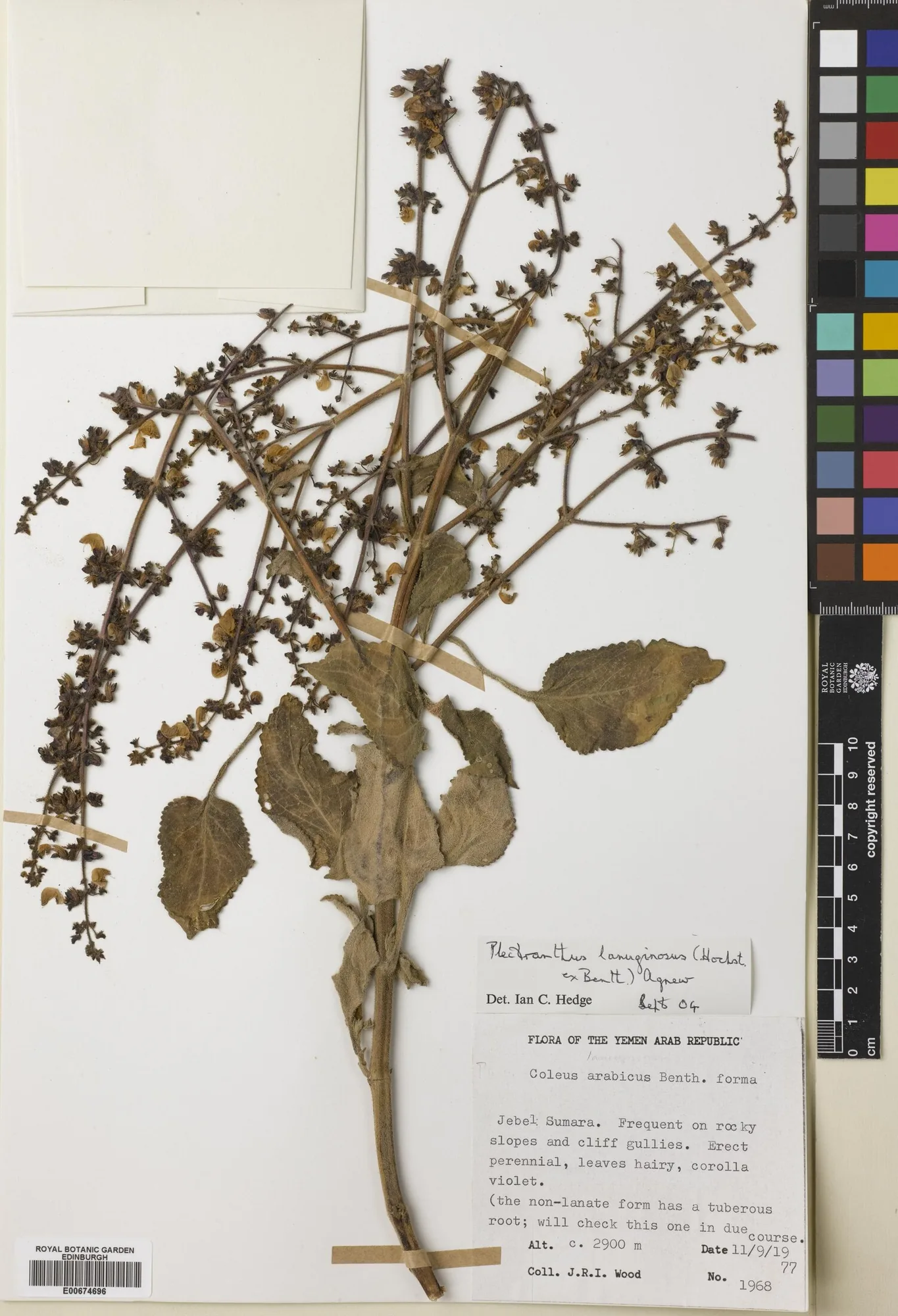
Coleus
lanuginosus
Akzeptierter Name nach Kew:Accepted name according to Kew: Coleus lanuginosus
Synonym: Plectranthus lanuginosus (Benth.) AgnewSynonym: Plectranthus lanuginosus (Benth.) Agnew
01 / VERBREITUNGDISTRIBUTION
Natürliche VerbreitungNatural distribution
Nach Kew WCVP: Eritrea bis Nordtansania und die südwestliche Arabische Halbinsel. Der dokumentierte Zugang RMY333 stammt aus Nordjemen, südöstlich von Hajjah, vom Djebel Maswar in 3.240 m Höhe.According to Kew WCVP: Eritrea to northern Tanzania and the south-western Arabian Peninsula. The documented accession RMY333 originates from Djebel Maswar, south-east of Hajjah in northern Yemen, at 3,240 m.
02 / ERKENNUNGCHARACTERS
Wuchs und MerkmaleHabit and characters
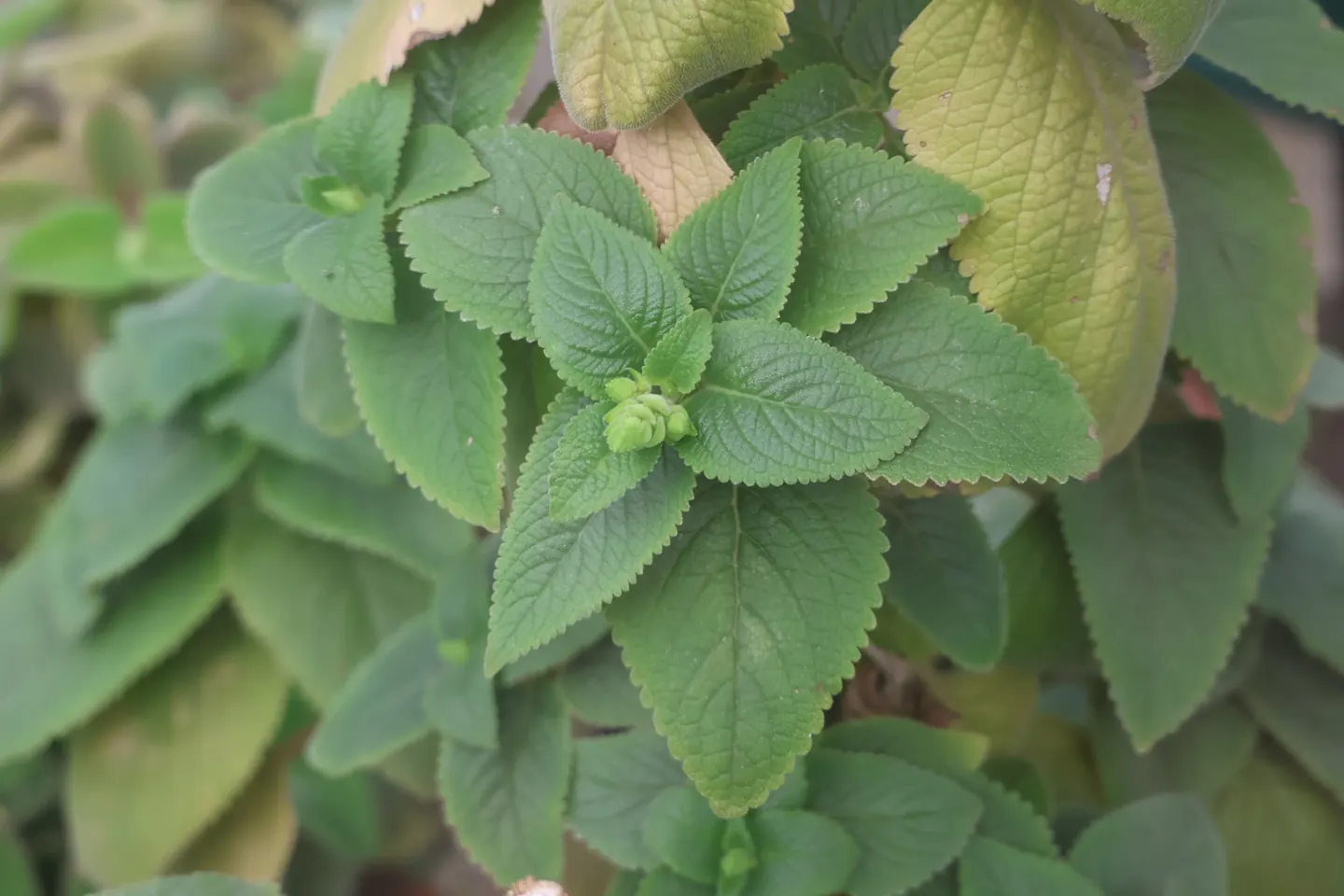
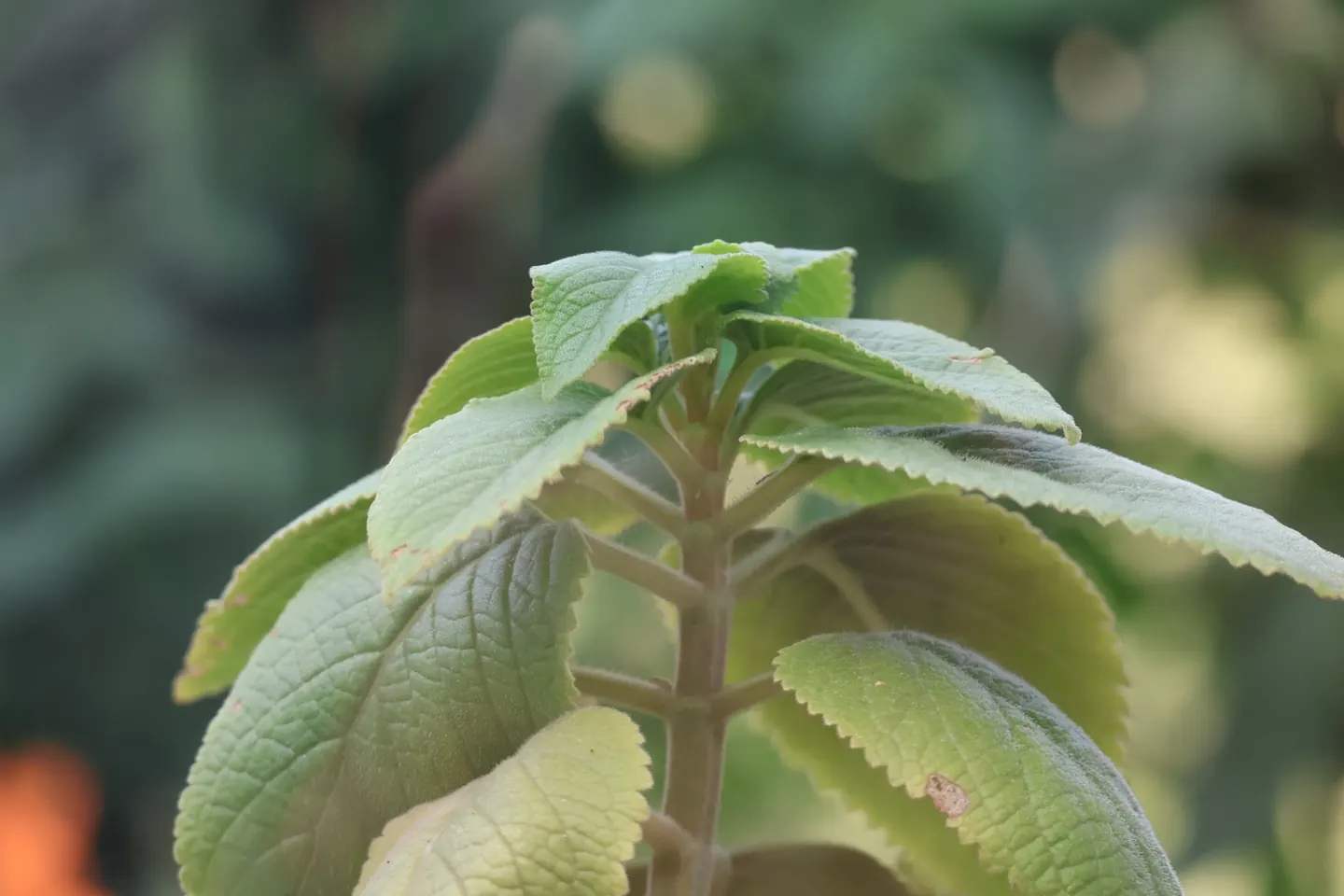
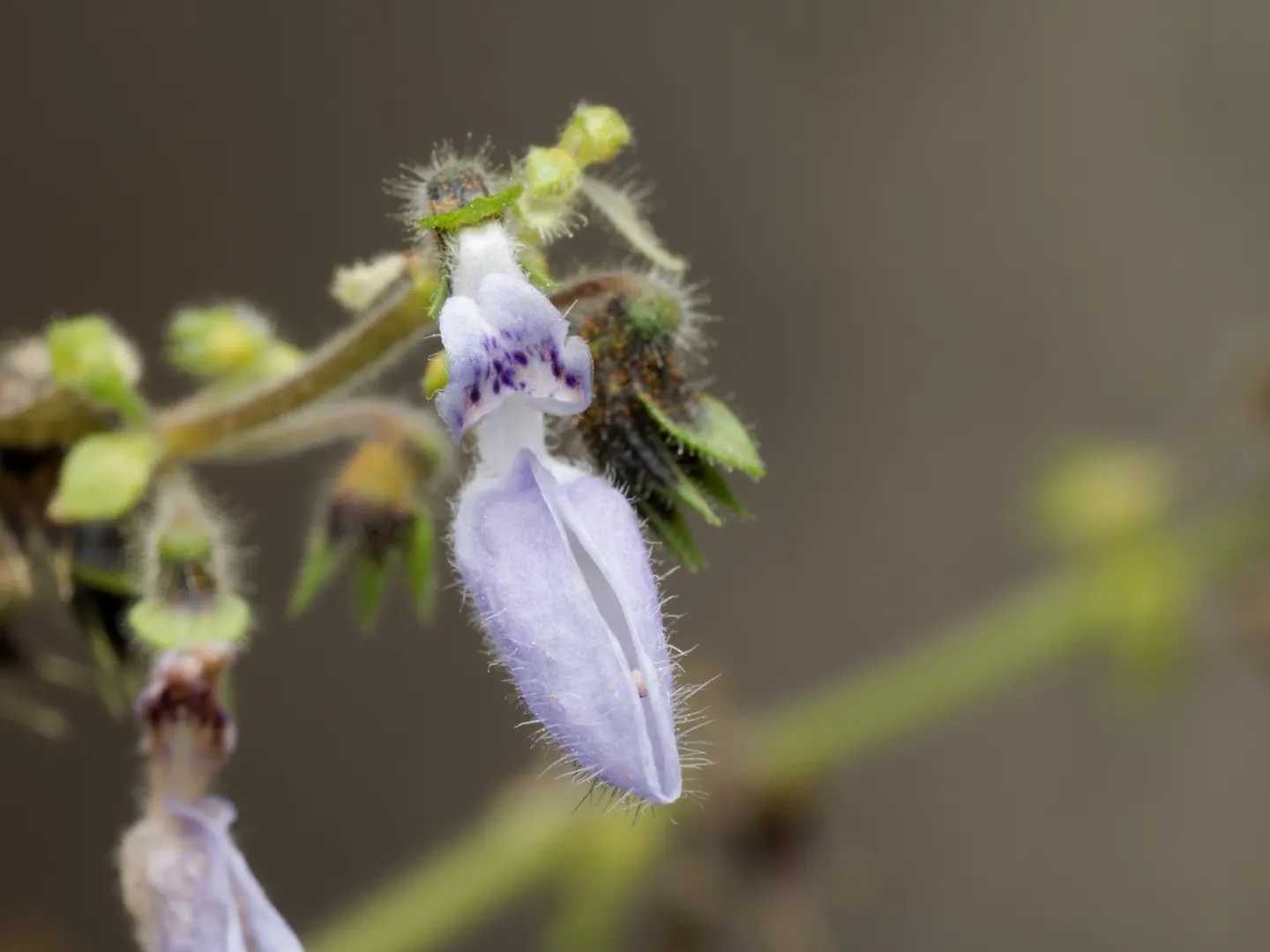
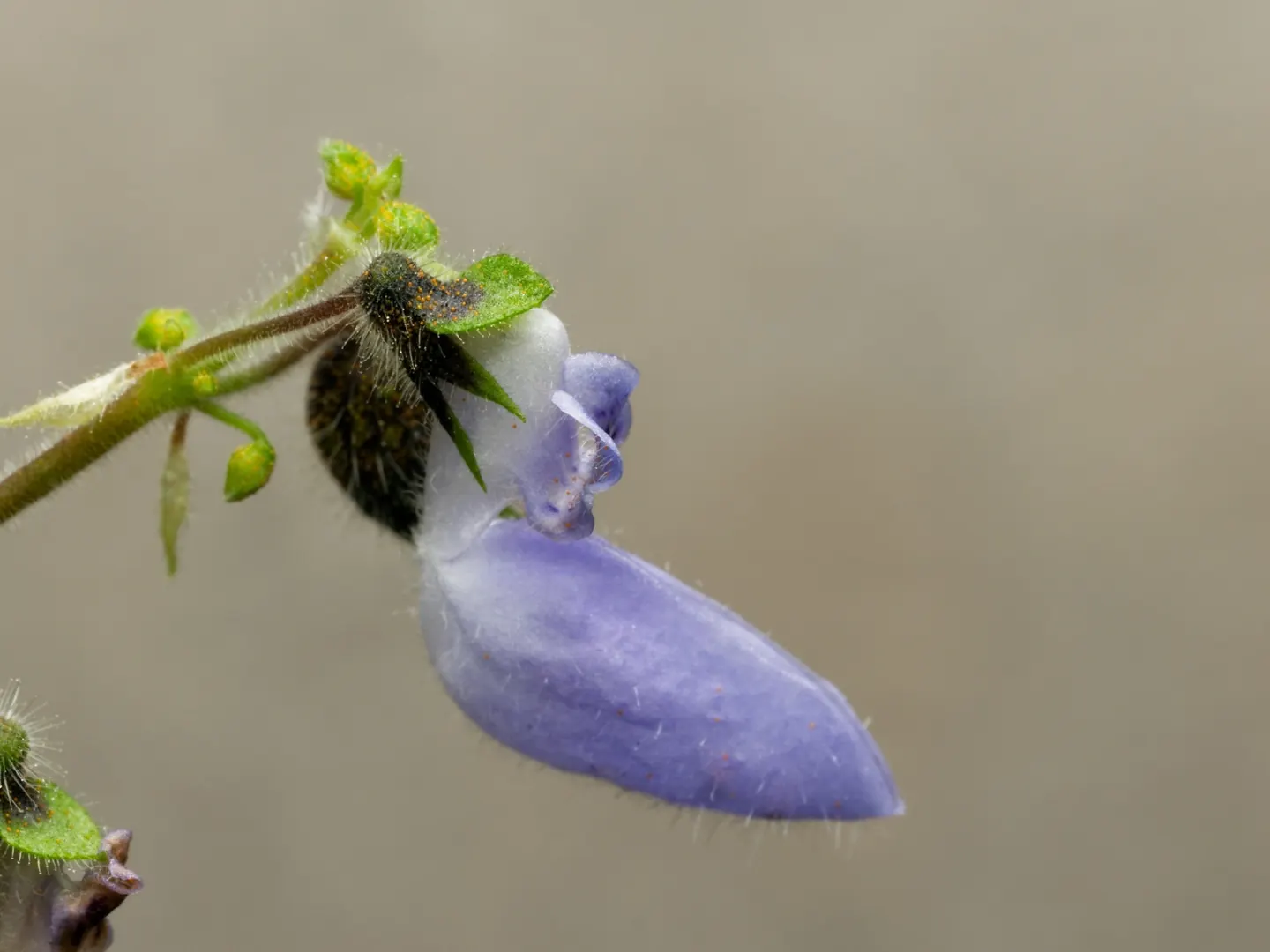
Aromatisches, etwas fleischiges ausdauerndes Kraut von 0,3–1 m Höhe, in Stützvegetation bis 2,5 m kletternd. Meist niederliegende oder spreizklimmende, frei verzweigte Triebe entspringen einer verzweigten Pfahlwurzel. Die fleischigen, dreieckigen Blätter messen meist 1,5–7 × 1–6 cm und besitzen 5–30 mm lange Stiele. Die blau bis purpurfarbene oder mauvefarbene Krone ist meist 11–13 mm lang. Im Schlüssel helfen die ungesprenkelten Stängel, die gestielten Blätter und die vergleichsweise lange Krone bei der Abgrenzung.An aromatic, somewhat fleshy perennial herb 0.3–1 m tall, scrambling to 2.5 m when supported. Usually trailing or scandent freely branched stems arise from a branched taproot. The fleshy triangular blades are mostly 1.5–7 × 1–6 cm with petioles 5–30 mm long. The blue, purple or mauve corolla is usually 11–13 mm long. In the key, unspotted stems, petiolate leaves and the relatively long corolla aid separation.
Aufnahmen des kultivierten Zugangs RMY333.Photographs of the cultivated accession RMY333.
03 / LEBENSRAUM UND KULTURHABITAT AND CULTIVATION
Reading the habitat
- Mikrohabitat & GeologieMicrohabitat & geology
- Die Flora of Tropical East Africa nennt felsige Hänge oder Klippen in 1.350–2.700 m Höhe. Belege liegen dort aus Uganda, Kenia und Tansania vor; die Gesamtverbreitung reicht zusätzlich nach Eritrea, Äthiopien, Somalia und auf die südwestliche Arabische Halbinsel.Flora of Tropical East Africa records rocky slopes or cliffs at 1,350–2,700 m. Specimens are cited there from Uganda, Kenya and Tanzania; the wider range also reaches Eritrea, Ethiopia, Somalia and the south-western Arabian Peninsula.
- Klima / StandorttypClimate / habitat type
- felsige tropische Hochlagen, 1.350–2.700 mrocky tropical highlands, 1,350–2,700 m
- Klima am dokumentierten FundortClimate at the documented locality
- RMY333 · Djebel Maswar, 3.240 m: Extrem hoch gelegener Standort im nordjemenitischen Bergland, südöstlich von Hajjah. Gegenüber den Tieflagen sind die Temperaturen deutlich niedriger; starke nächtliche Abkühlung, hohe Einstrahlung und episodische, überwiegend sommerliche Niederschläge prägen den Standort. Die regionalen Klimawerte sind in dieser Höhenlage nur als grobe Orientierung zu verstehen.
- RMY333 · Djebel Maswar, 3,240 m: An exceptionally high-elevation locality in the northern Yemeni mountains, south-east of Hajjah. Temperatures are markedly lower than in the lowlands; strong nocturnal cooling, intense radiation and episodic, mainly summer rainfall characterise the site. Regional climate values are only a broad guide at this elevation.
Die Werte sind regionale Orientierungsbereiche, keine Messungen am Sammelpunkt. Grundlage sind WorldClim 2.1 (1970–2000) und die Köppen-Geiger-Karte (1980–2016); Mikrohabitate können deutlich abweichen.Values are regional orientation ranges, not measurements at the collection point. They are based on WorldClim 2.1 (1970–2000) and the Köppen-Geiger map (1980–2016); microsites may differ substantially.
- Cultivation inference
- Felsige Hochlagen sprechen für sehr gute Drainage, viel Licht und merkliche nächtliche Abkühlung. Während aktiven Wachstums mäßig wässern, das Substrat dazwischen abtrocknen lassen und dauerhaft warme, feuchte, stehende Luft vermeiden.Rocky high-elevation habitats indicate excellent drainage, bright light and appreciable night cooling. Water moderately during active growth, allow the substrate to dry between waterings, and avoid persistently warm, humid stagnant air.
- Status of information
- DIAGNOSE, SCHLÜSSELMERKMALE UND STANDORT AUS DER FLORA · KULTUR ABGELEITETDIAGNOSIS, KEY CHARACTERS AND HABITAT FROM THE FLORA · CULTIVATION INFERRED
04 / ETHNOBOTANIKETHNOBOTANY
Überlieferte NutzungTraditional use
In den für dieses Porträt verwendeten Quellen ist keine eindeutig artspezifische traditionelle Nutzung belegt. Angaben zu verwandten Arten werden nicht übertragen.The sources used for this profile do not document an unambiguous species-specific traditional use. Uses reported for related species are not transferred.
05 / SAMMLUNGCOLLECTION
Collection record
Etikettangabe RMY 333: Nordjemen, südöstlich von Hajjah, Djebel Maswar, 3.240 m. Die Lokalität wird als dokumentierte Herkunft des Zugangs geführt und nicht aus der Artbestimmung abgeleitet.Label record RMY 333: northern Yemen, south-east of Hajjah, Djebel Maswar, 3,240 m. The locality is retained as the documented origin of the accession and is not inferred from the identification.
DOKUMENTIERTE ZUGÄNGEDOCUMENTED ACCESSIONSDokumentierte Zugänge:Documented accessions:
- Coleus lanuginosus — RMY333 · Nordjemen · südöstlich von Hajjah · Djebel Maswar · 3.240 m
06 / QUELLENSOURCES
Literature used
- Govaerts, R. et al.: World Checklist of Vascular Plants, Royal Botanic Gardens, Kew.
- Paton, A. J. et al. (2019): Nomenclatural changes in Coleus and Plectranthus (Lamiaceae). PhytoKeys 129: 1–158.
- Paton, A. J. et al. (2009): Flora of Tropical East Africa — Lamiaceae, Plectranthus lanuginosus: 347–349.
- Thulin, M. (Hrsg.) (2006): Flora of Somalia, Band 3; Behandlung unter Plectranthus lanuginosus.
- Fick, S. E. & Hijmans, R. J. (2017): WorldClim 2: new 1-km spatial resolution climate surfaces for global land areas. International Journal of Climatology 37: 4302–4315.
- Beck, H. E. et al. (2018): Present and future Köppen-Geiger climate classification maps at 1-km resolution. Scientific Data 5: 180214.
07 / EIGENE AUFNAHMENCULTIVATED PLANTS
Pflanzen in KulturPlants in cultivation