MORACEAE · SOMALIA · UNGEKLÄRTER ZUGANG
Dorstenia
sp.
LAV 23877 · überlieferte Sammlungsbezeichnung
01 / VERBREITUNGDISTRIBUTION
Natürliche VerbreitungNatural distribution
Der Zugang ist als „Somalia, LAV 23877“ etikettiert. In der zugänglichen Lavranos-Datenbank ist 23877 jedoch einer Crassula zugeordnet. Eine Dorstenia-Aufsammlung mit der sehr ähnlichen Nummer LAV 24877 stammt aus den Carcar Hills, etwa 100 Kilometer nördlich von Qardho. Das spricht für einen möglichen Übertragungsfehler, beweist ihn aber nicht. Die erhaltene Nummer bleibt deshalb unverändert; die Carcar-Herkunft wird nur als Arbeitshypothese geführt.The accession is labelled “Somalia, LAV 23877”. In the accessible Lavranos database, however, 23877 belongs to a Crassula. A Dorstenia collection with the very similar number LAV 24877 comes from the Carcar Hills, about 100 kilometres north of Qardho. This suggests a possible transcription error but does not prove one. The received number is therefore retained, with the Carcar origin shown only as a working hypothesis.
02 / ERKENNUNGCHARACTERS
Säulenförmiger Spross und bleibende NarbenColumnar stem and persistent scars
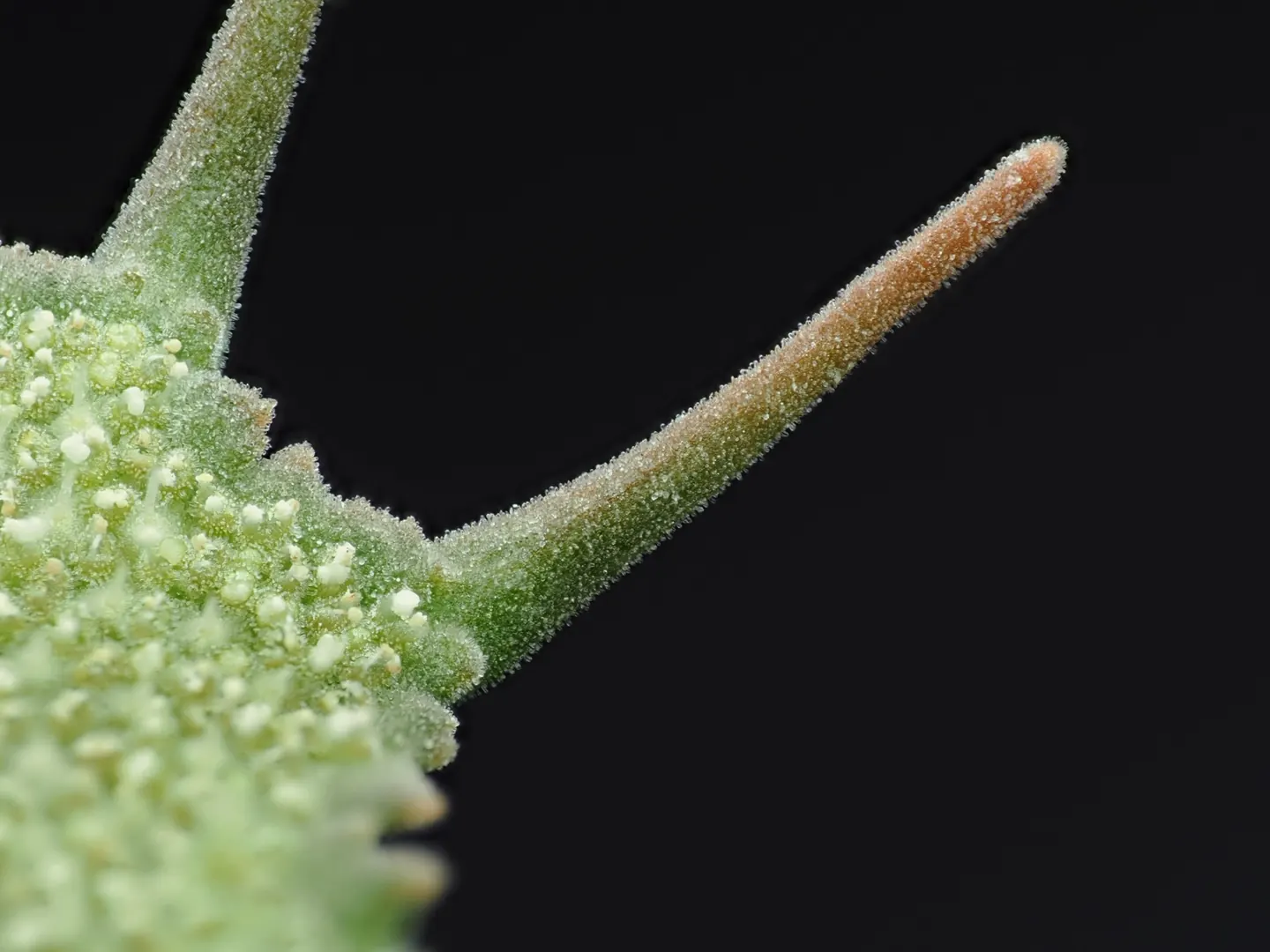
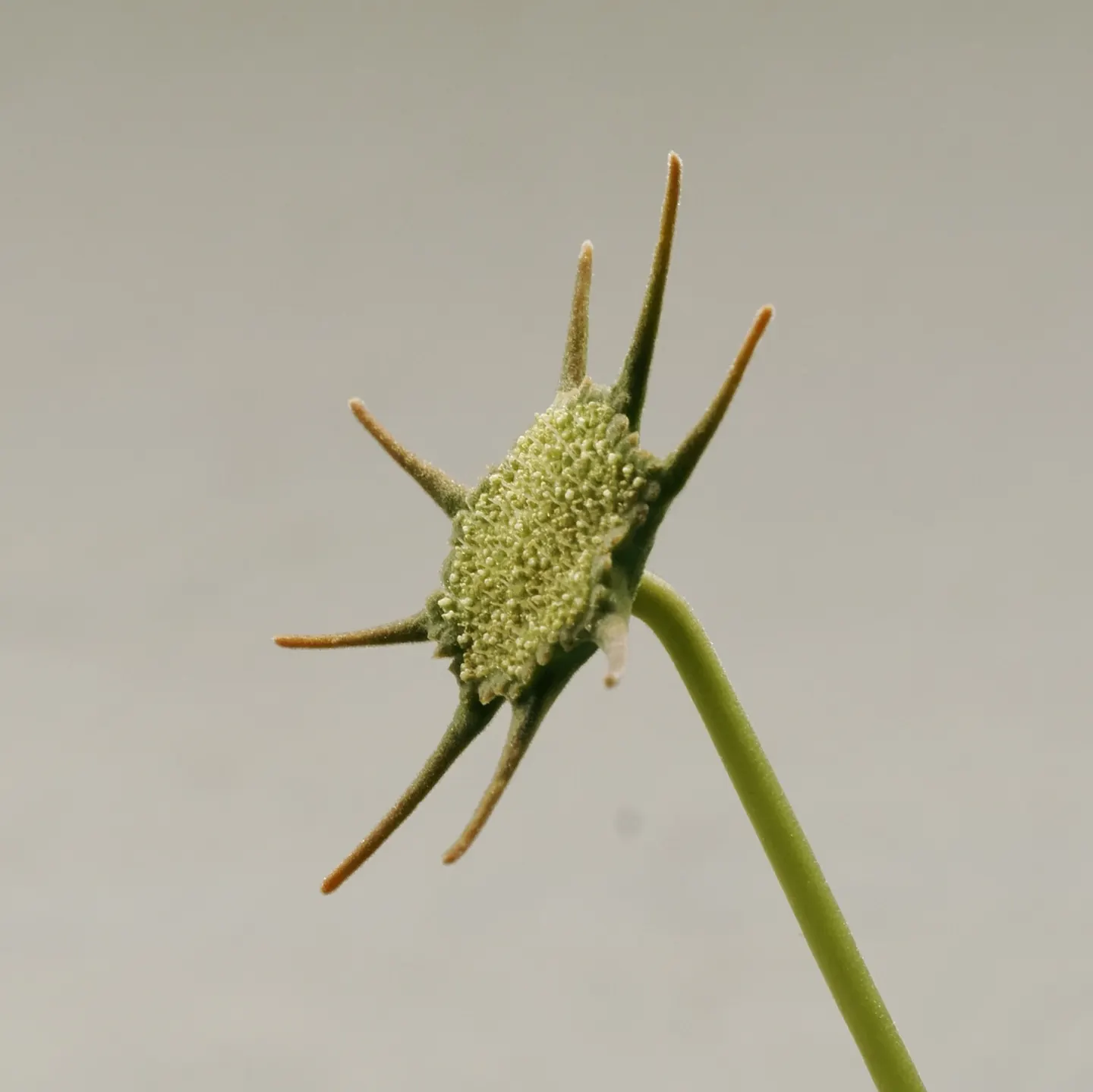
Die von Maremma Cactus als LAV 23877 vorgestellte Pflanze besitzt einen zylindrischen, säulenförmigen Stamm, Blätter mit gewelltem bis gekräuseltem Rand und lange, ausdauernde Nebenblätter. Nach dem Blattfall bleiben erhabene, dauerhafte Blattnarben zurück. Diese Merkmale dokumentieren den in Kultur verbreiteten Typ, erlauben ohne gesichertes Typ- oder Vergleichsmaterial aber noch keine Artbestimmung. Der Zugang bleibt daher als Dorstenia sp. geführt.The plant presented by Maremma Cactus as LAV 23877 has a cylindrical, columnar stem, leaves with undulate to crisped margins, and long persistent stipules. Raised permanent leaf scars remain after the leaves fall. These characters document the cultivated type but, without secure type or comparative material, do not yet permit a species identification. The accession therefore remains listed as Dorstenia sp.
Aufnahmen des kultivierten Zugangs LAV 23877.Photographs of the cultivated accession LAV 23877.
03 / LEBENSRAUM UND KULTURHABITAT AND CULTIVATION
Reading the habitat
- Mögliche LandschaftPossible landscape
- Falls die vermutete Gleichsetzung mit LAV 24877 zutrifft, führt die Spur in die Carcar Hills im nordöstlichen Somalia. Kalkrücken und felsige Hänge erheben sich dort aus dem trockenen Hochland um Qardho. Offene Buschlandschaften werden vor allem von trockenheitsangepassten Acacia-, Commiphora- und Boswellia-Arten geprägt.If the tentative match with LAV 24877 is correct, the trail leads to the Carcar Hills of north-eastern Somalia. Limestone ridges and rocky slopes rise from the dry uplands around Qardho. Open scrub is shaped chiefly by drought-adapted Acacia, Commiphora and Boswellia.
- Grenze der AussageLimit of the evidence
- Für den als LAV 23877 erhaltenen Zugang ist weder diese genaue Lokalität noch ein Mikrohabitat sicher belegt. Landschaft und Gestein dürfen deshalb nicht als gesicherte Standortangabe der Pflanze gelesen werden.Neither this precise locality nor a microhabitat is securely documented for the accession received as LAV 23877. Landscape and geology must therefore not be read as confirmed habitat data for the plant.
- Klima am dokumentierten FundortClimate at the documented locality
- Somalia, Lav23877: Somalia, ohne genaueren Fundort: heiß-arid bis semiarid mit langen Trockenzeiten und meist zwei kurzen, unzuverlässigen Regenzeiten; regional grob 100–500 mm/Jahr und 23–30 °C, stark höhenabhängig.
- Somalia, Lav23877: Somalia without a more precise locality: hot-arid to semi-arid, with long dry periods and usually two short, unreliable rainy seasons; regionally about 100–500 mm/year and 23–30 °C, strongly elevation-dependent.
Die Werte sind regionale Orientierungsbereiche, keine Messungen am Sammelpunkt. Grundlage sind WorldClim 2.1 (1970–2000) und die Köppen-Geiger-Karte (1980–2016); Mikrohabitate können deutlich abweichen.Values are regional orientation ranges, not measurements at the collection point. They are based on WorldClim 2.1 (1970–2000) and the Köppen-Geiger map (1980–2016); microsites may differ substantially.
- Cultivation inference
- Bis die Herkunft geklärt ist, ist eine konservative Kultur sinnvoll: warm, hell und luftig; ein grobes, rasch abtrocknendes Substrat; während sichtbaren Wachstums gründlich gießen, aber keine dauerhafte Nässe. Diese Empfehlung folgt dem sukkulenten Wuchs und dem regionalen Trockenklima, nicht einem belegten Mikrostandort.Until the origin is resolved, conservative cultivation is appropriate: warm, bright and airy; a coarse, rapidly drying mix; thorough watering during visible growth without persistent wetness. This follows the succulent habit and regional dry climate, not a documented microhabitat.
- Status of information
- HERKUNFTSHYPOTHESE · KULTUR VORSICHTIG ABGELEITETORIGIN HYPOTHESIS · CULTIVATION CAUTIOUSLY INFERRED
04 / ETHNOBOTANIKETHNOBOTANY
Keine artspezifische Nutzung belegtNo species-specific use documented
Wegen der ungeklärten Bestimmung lässt sich keine ethnobotanische Angabe seriös auf diesen Zugang übertragen. Für die mögliche Herkunftslandschaft sind dagegen Weihrauch und Myrrhe prägend: Harze von Boswellia und Commiphora werden in Nord-Somalia seit Jahrhunderten gewonnen und gehandelt. Das ist regionaler Kontext, keine Nutzung dieser Dorstenia.Because the identification is unresolved, no ethnobotanical record can responsibly be assigned to this accession. Frankincense and myrrh are central to the possible region of origin: resins of Boswellia and Commiphora have been harvested and traded in northern Somalia for centuries. This is regional context, not a use of this Dorstenia.
05 / SAMMLUNGCOLLECTION
Collection record
Überliefertes Etikett: Dorstenia sp., Somalia, LAV 23877. Die Pflanze wird nicht als D. lavrani oder als unbeschriebene neue Art ausgegeben.Received label: Dorstenia sp., Somalia, LAV 23877. The plant is not presented as D. lavrani or as an undescribed new species.
ETIKETT BEWAHRT · BESTIMMUNG OFFENLABEL RETAINED · IDENTIFICATION OPENDokumentierte Zugänge:Documented accessions:
- Dorstenia sp. — Somalia, Lav23877
06 / QUELLENSOURCES
Literature used
- Maremma Cactus: Dorstenia sp. nov. LAV23877 — Beschreibung des Kulturtyps sowie Hinweis auf die wahrscheinlich fehlerhafte Feldnummer und LAV 24877.
- Rzepecky, A. (2016): Dorstenia horwoodii Rzepecky sp. nov. from Nudum to Novum, a Fortyish Year Hiatus. Cactus and Succulent Journal 88(2): 66–74 — zum Vergleich des D.-foetida-Komplexes.
- Friis, I. (1999): Moraceae. In: Thulin, M. (Hrsg.), Flora of Somalia 2.
- Regionale Vegetationsliteratur zu Kalkhängen, Boswellia- und Commiphora-Buschland im nordöstlichen Somalia.
- Fick, S. E. & Hijmans, R. J. (2017): WorldClim 2: new 1-km spatial resolution climate surfaces for global land areas. International Journal of Climatology 37: 4302–4315.
- Beck, H. E. et al. (2018): Present and future Köppen-Geiger climate classification maps at 1-km resolution. Scientific Data 5: 180214.
07 / EIGENE AUFNAHMENCULTIVATED PLANTS
Pflanzen in KulturPlants in cultivation