MORACEAE · SANAAG · SOMALIA
Dorstenia
foetida
L&H 10341 · in Sammlungen auch „LAV 10341“ · Mait Escarpment
01 / VERBREITUNGDISTRIBUTION
Natürliche VerbreitungNatural distribution
Die Aufsammlung von John Lavranos und Frank Horwood stammt von den unteren Hängen des Mait Escarpment nördlich von Erigavo in der Sanaag-Region, nördliches Somalia (Somaliland). Für den Zugang werden etwa 1.150 Meter Höhe angegeben. Die korrekte Sammlernummer lautet L&H 10341; die Kurzform LAV 10341 ist in Kultur verbreitet.The collection by John Lavranos and Frank Horwood comes from the lower slopes of the Mait Escarpment north of Erigavo in the Sanaag region of northern Somalia (Somaliland), at about 1,150 metres. The full collector number is L&H 10341; the abbreviated LAV 10341 is widely used in cultivation.
02 / ERKENNUNGCHARACTERS
Eine Form des variablen KomplexesA form of a variable complex
Rzepecky behandelt L&H 10341 als Dorstenia foetida und beschreibt den Zugang als hohe, verzweigte und vergleichsweise glatte Form. Damit gehört er zum außerordentlich variablen D.-foetida-Komplex und nicht zu D. horwoodii. In der Kultur können Wuchs und Blattgröße kräftiger ausfallen als bei Pflanzen am Naturstandort; für Vergleiche sind deshalb Blütenstände, Behaarung und dauerhaft erkennbare Sprossmerkmale wichtiger als die Größe allein.Rzepecky treats L&H 10341 as Dorstenia foetida, describing it as a tall, branched and comparatively smooth form. It therefore belongs to the highly variable D. foetida complex rather than to D. horwoodii. Cultivated plants may become more luxuriant than habitat plants, so inflorescences, indumentum and persistent stem characters are more useful than size alone.
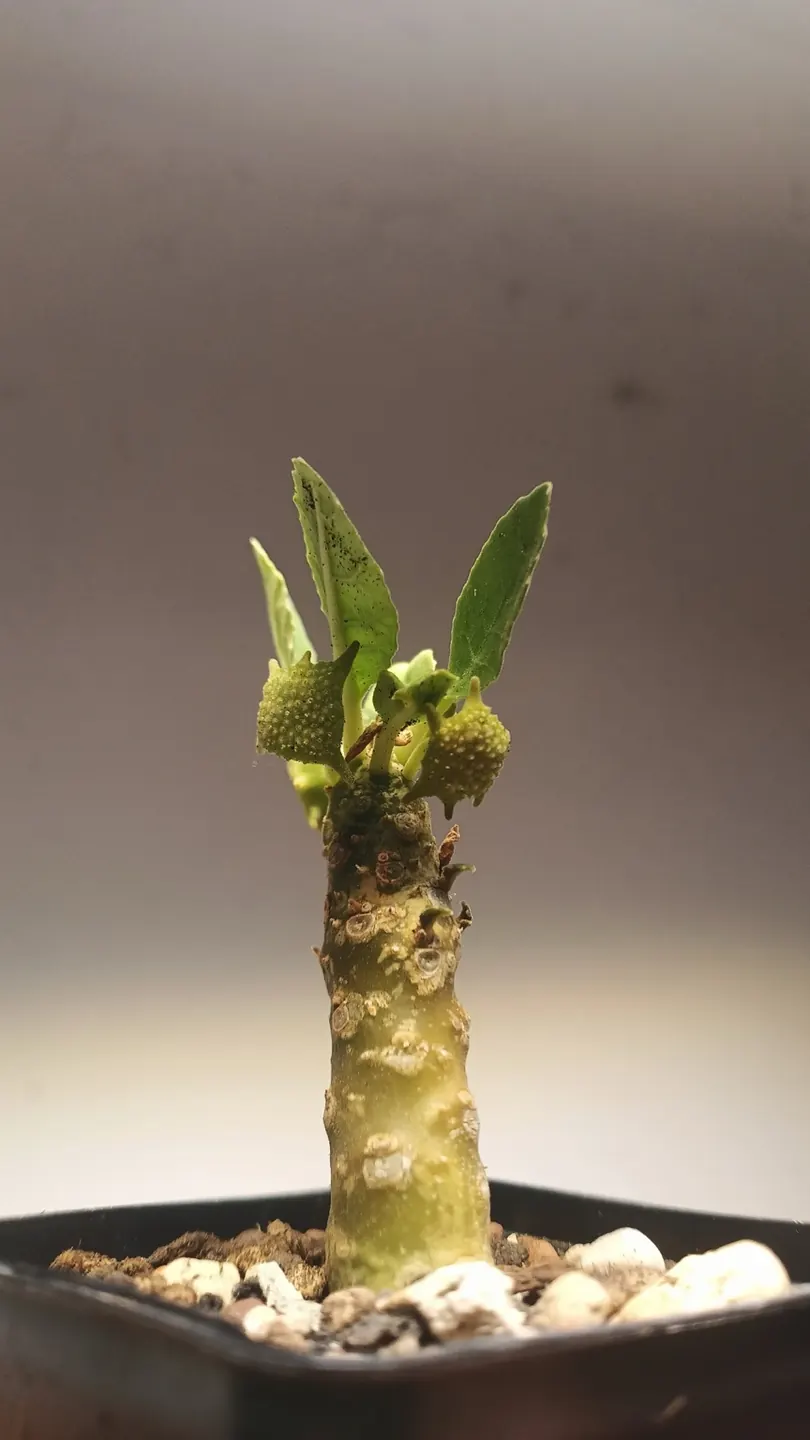
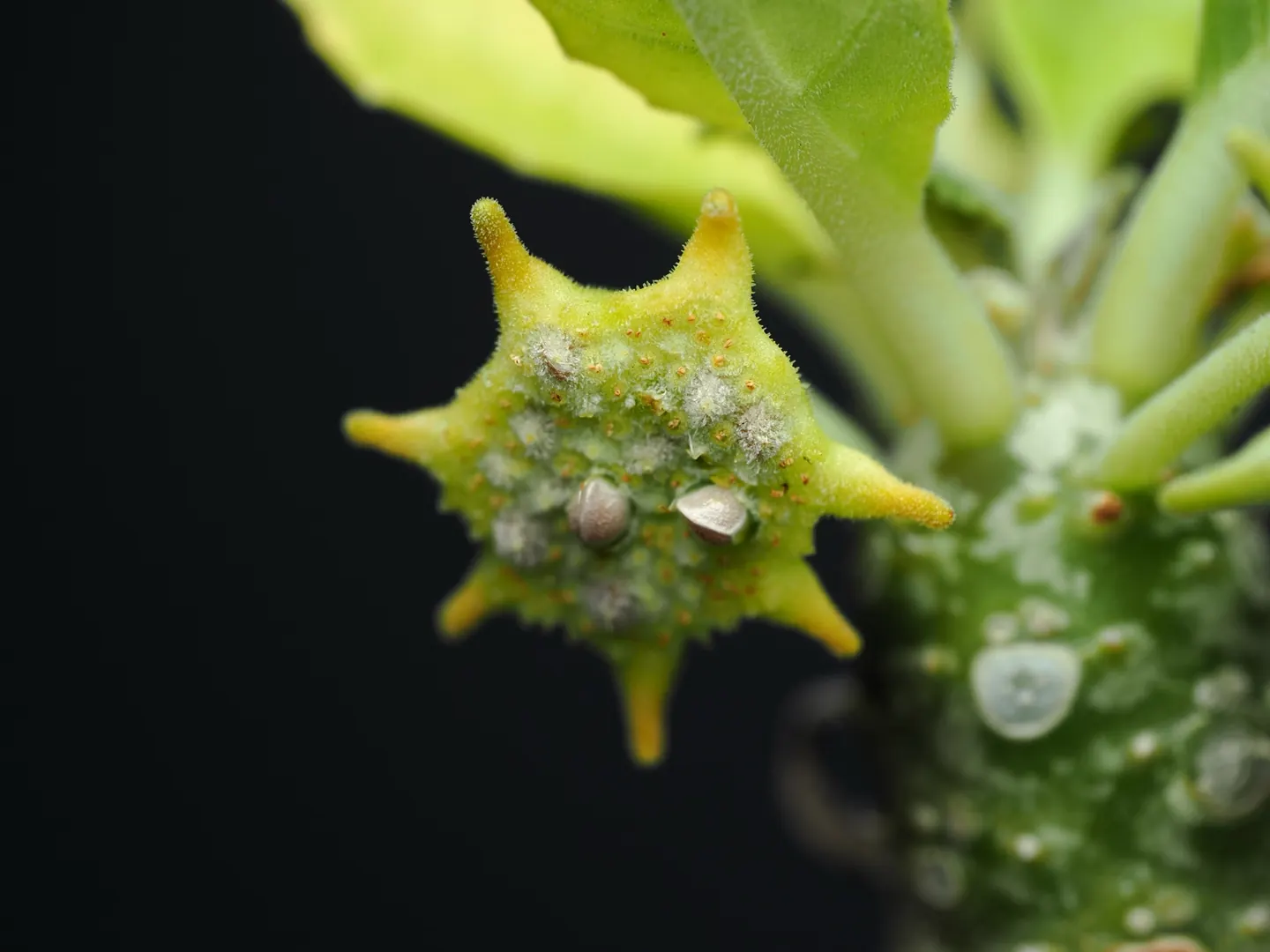
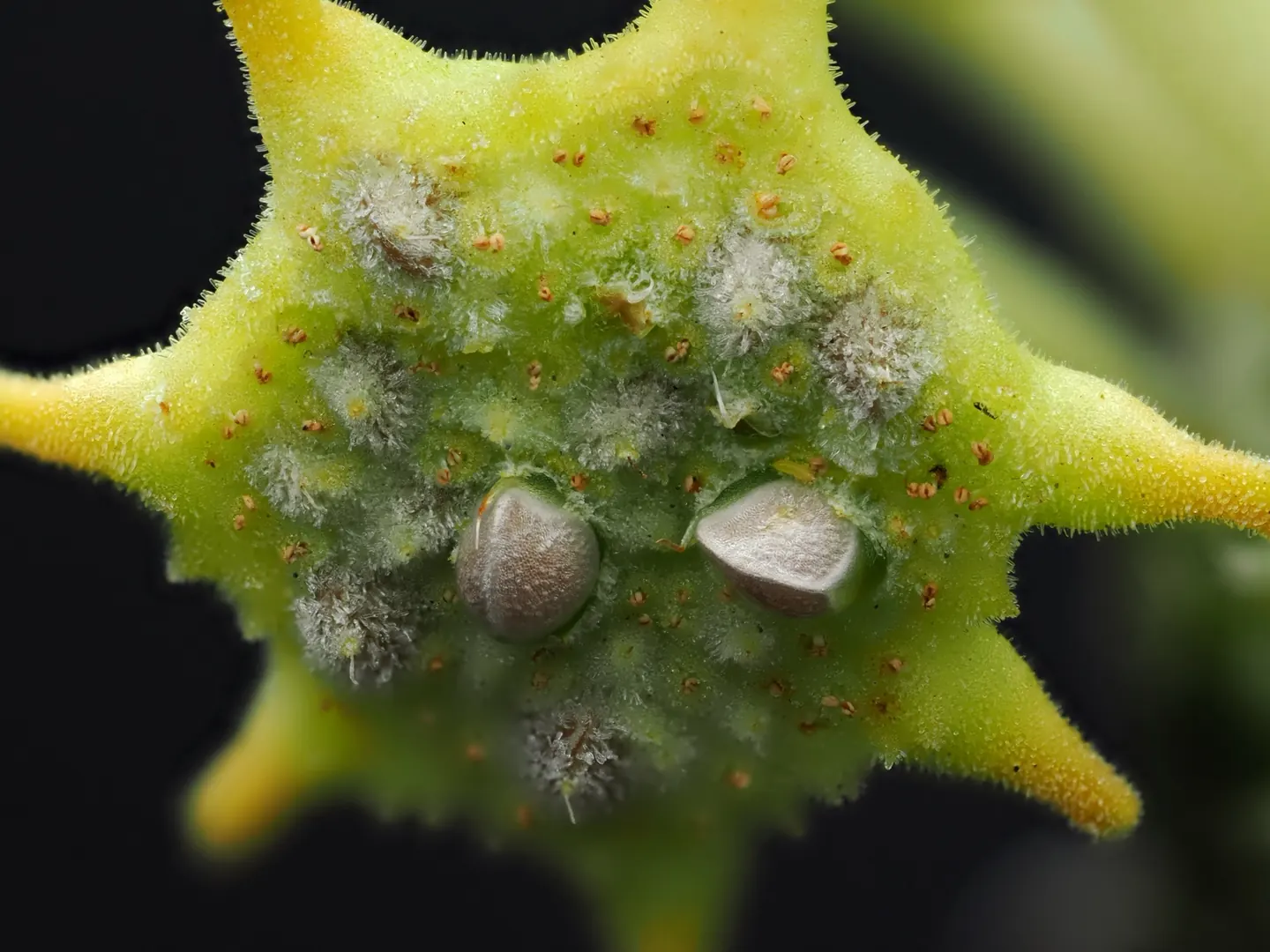
Aufnahmen des kultivierten Zugangs LAV 10341.Photographs of the cultivated accession LAV 10341.
03 / LEBENSRAUM UND KULTURHABITAT AND CULTIVATION
Reading the habitat
- LandschaftLandscape
- Das Mait Escarpment bildet den steilen nördlichen Abfall des Sanaag-Hochlands zum Golf von Aden. Um 1.150 Meter liegt der Fundort im Übergang von trockenen, felsigen Buschlandschaften mit Acacia, Commiphora und Boswellia zu den feuchteren Berglagen; höher am Escarpment stehen Reste von Wacholder- und Ölbäumen.The Mait Escarpment is the steep northern face of the Sanaag highlands above the Gulf of Aden. At about 1,150 metres the locality lies between dry rocky scrub with Acacia, Commiphora and Boswellia and the moister uplands; remnants of juniper and olive woodland occur higher on the escarpment.
- KlimaClimate
- Die Höhenlage mildert die Hitze des Tieflands. Niederschläge bleiben saisonal und unregelmäßig; Hanglage, Wolken und Nebel können zusätzlich Feuchtigkeit liefern, während flachgründiger Fels rasch wieder abtrocknet.Elevation moderates the heat of the lowlands. Rain remains seasonal and irregular; slope, cloud and mist can add moisture, while shallow rocky ground dries rapidly.
- Klima am dokumentierten FundortClimate at the documented locality
- Lav10341, Mait Escarpement: Sanaag-Hochland: arid bis semiarid und durch die Höhenlage kühler als die Tiefländer; unregelmäßiger saisonaler Regen und örtlicher Nebel, regional grob 200–500 mm/Jahr und 18–26 °C.
- Lav10341, Mait Escarpement: Sanaag highlands: arid to semi-arid and cooler than the lowlands; irregular seasonal rain and local fog, regionally about 200–500 mm/year and 18–26 °C.
Die Werte sind regionale Orientierungsbereiche, keine Messungen am Sammelpunkt. Grundlage sind WorldClim 2.1 (1970–2000) und die Köppen-Geiger-Karte (1980–2016); Mikrohabitate können deutlich abweichen.Values are regional orientation ranges, not measurements at the collection point. They are based on WorldClim 2.1 (1970–2000) and the Köppen-Geiger map (1980–2016); microsites may differ substantially.
- Cultivation inference
- Warm, hell und luftig kultivieren, aber eine extreme Tieflandhitze nicht als zwingend voraussetzen. Ein grobes, schnell entwässerndes Substrat und durchdringende Wassergaben während des belaubten Wachstums mit deutlichem Abtrocknen dazwischen bilden einen vorsichtigen Ausgangspunkt. In einer blattlosen Ruhephase wird entsprechend weniger gegossen.Grow warm, bright and airy without assuming extreme lowland heat is essential. A coarse, rapidly draining mix and thorough watering during leafy growth, followed by clear drying, provide a cautious starting point. Water is reduced during a leafless resting phase.
- Status of information
- HERKUNFT BELEGT · MIKROHABITAT TEILWEISE ABGELEITET · KULTUR ABGELEITETORIGIN DOCUMENTED · MICROHABITAT PARTLY INFERRED · CULTIVATION INFERRED
04 / ETHNOBOTANIKETHNOBOTANY
Nutzung der Art – nicht des ZugangsUse of the species, not the accession
Aus Oman ist überliefert, dass die knolligen Wurzeln von Dorstenia foetida gekocht und gegessen werden. Diese Angabe belegt keine entsprechende Nutzung der Population am Mait Escarpment; sie wird hier ausdrücklich nur als ethnobotanischer Hinweis zur weit verbreiteten Art geführt. Die Landschaft Nord-Somalias ist darüber hinaus seit Langem durch die Gewinnung von Weihrauch und Myrrhe aus Boswellia- und Commiphora-Arten geprägt.In Oman, the tuberous roots of Dorstenia foetida are recorded as being cooked and eaten. This does not demonstrate the same use at Mait Escarpment and is included only as ethnobotanical context for the widespread species. Northern Somalia is also a long-established frankincense and myrrh landscape based on Boswellia and Commiphora.
05 / SAMMLUNGCOLLECTION
Collection record
L&H 10341 (in Kultur meist LAV 10341), Mait Escarpment, Sanaag, nördliches Somalia; ca. 1.150 m. Der Zugang wird unter dem in der Fachliteratur verwendeten Namen Dorstenia foetida geführt.L&H 10341 (usually LAV 10341 in cultivation), Mait Escarpment, Sanaag, northern Somalia; ca. 1,150 m. The accession is maintained under the name Dorstenia foetida used in the specialist literature.
DOKUMENTIERTE AUFSAMMLUNGDOCUMENTED COLLECTIONDokumentierte Zugänge:Documented accessions:
- Dorstenia sp. — Lav10341, Mait Escarpement
06 / QUELLENSOURCES
Literature used
- Rzepecky, A. (2016): Dorstenia horwoodii Rzepecky sp. nov. from Nudum to Novum, a Fortyish Year Hiatus. Cactus and Succulent Journal 88(2): 66–74.
- Friis, I. (1999): Moraceae. In: Thulin, M. (Hrsg.), Flora of Somalia 2.
- Marwah, R. G. et al. (2007): Antioxidant capacity of some edible and wound healing plants in Oman. Food Chemistry 101.
- Somali montane xeric woodlands: regionale Vegetationsliteratur zum Sanaag-Escarpment.
- Fick, S. E. & Hijmans, R. J. (2017): WorldClim 2: new 1-km spatial resolution climate surfaces for global land areas. International Journal of Climatology 37: 4302–4315.
- Beck, H. E. et al. (2018): Present and future Köppen-Geiger climate classification maps at 1-km resolution. Scientific Data 5: 180214.
07 / EIGENE AUFNAHMENCULTIVATED PLANTS
Pflanzen in KulturPlants in cultivation