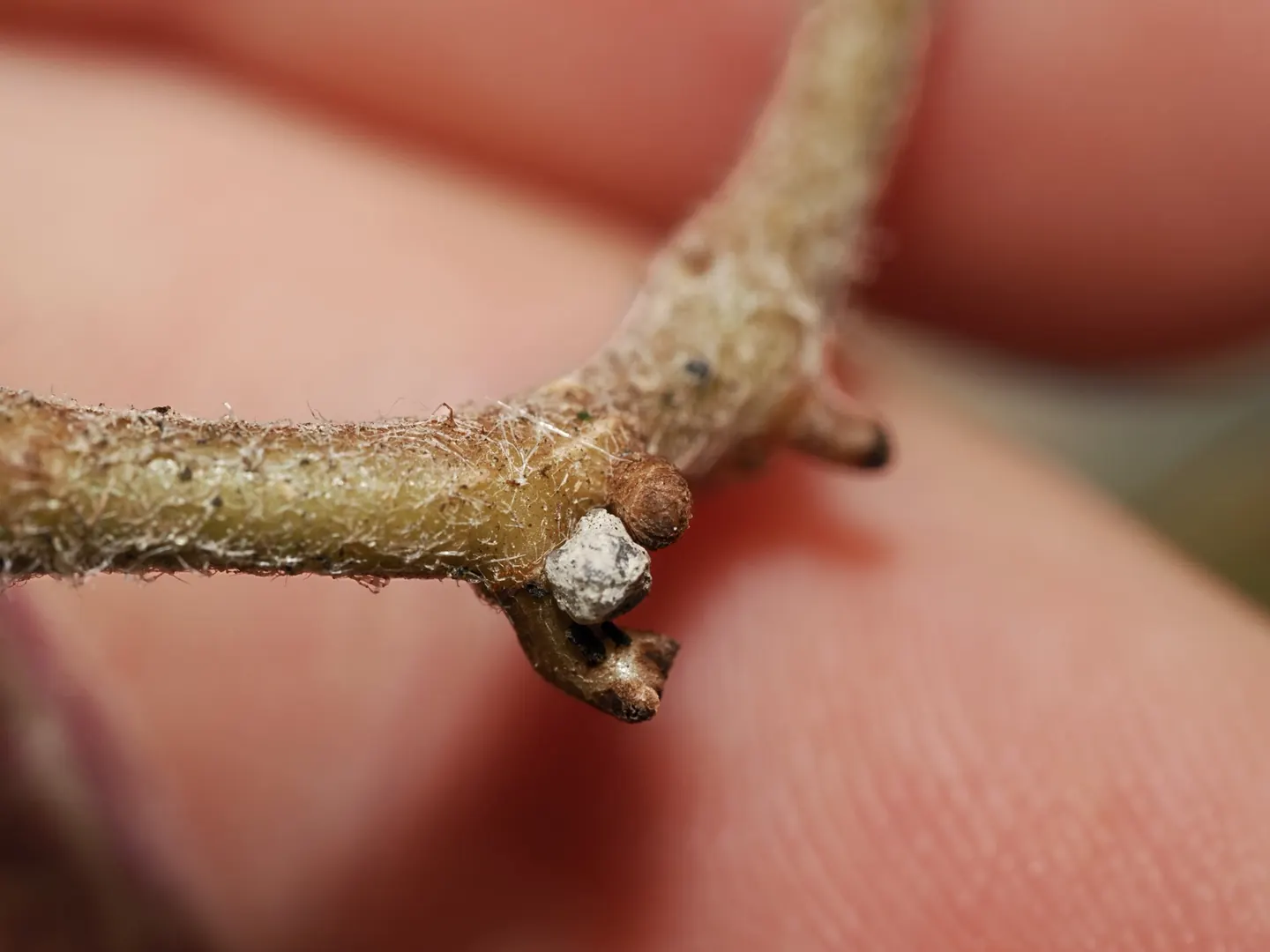
Lamiaceae · ARCHIVBLATT
Coleus
lasianthus
Akzeptierter Name nach Kew: Accepted name according to Kew: Coleus lasianthus
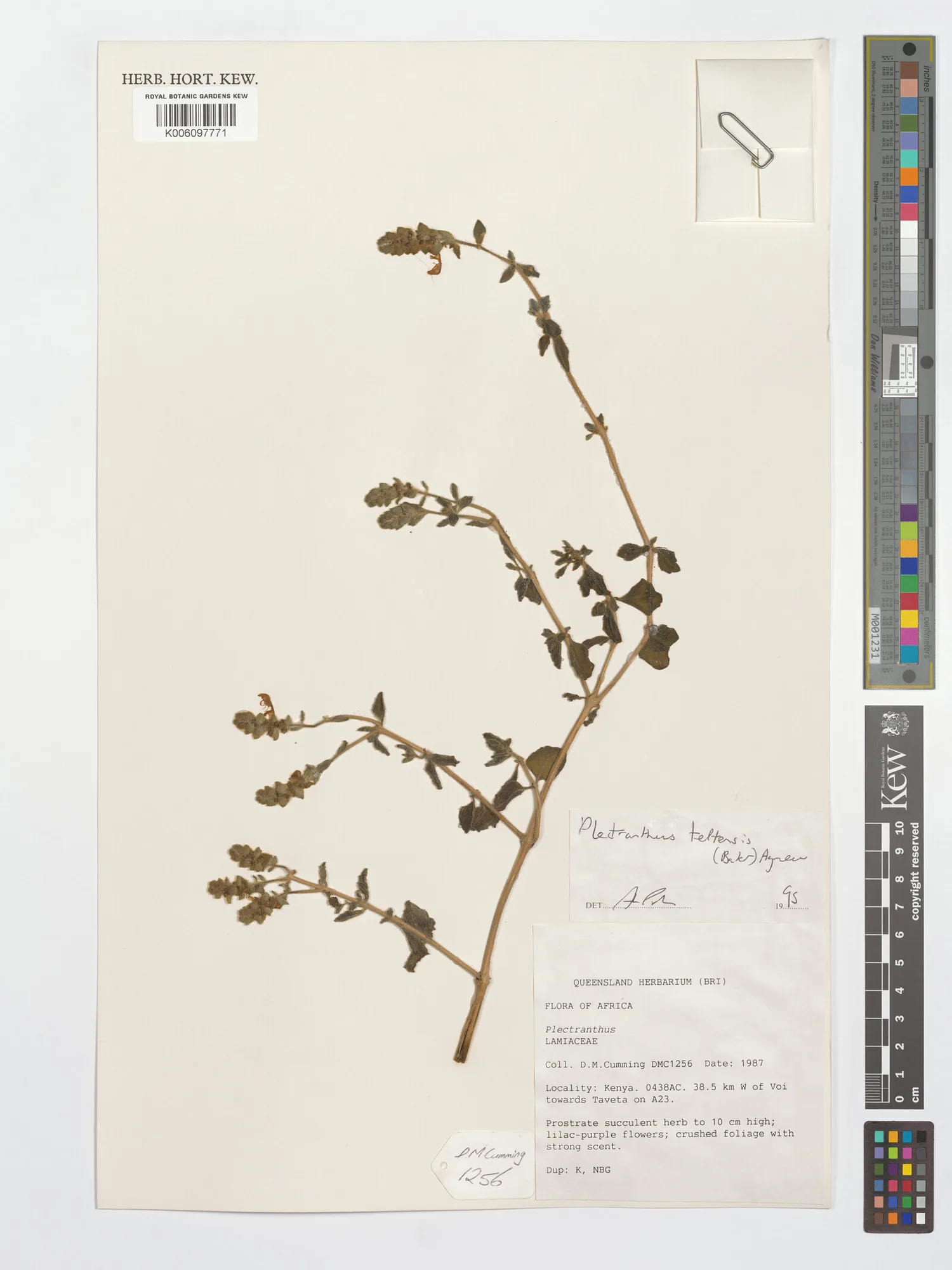
Synonyme: Plectranthus lasianthus, Plectranthus tetensis, Coleus tetensis Synonyms: Plectranthus lasianthus, Plectranthus tetensis, Coleus tetensis
01 / VERBREITUNGDISTRIBUTION
Natürliche VerbreitungNatural distribution
Nach Kew WCVP: S. Ethiopia to S. Africa, Madagascar. According to Kew WCVP: S. Ethiopia to S. Africa, Madagascar.
02 / ERKENNUNGCHARACTERS
Wuchs und Merkmale Habit and characters
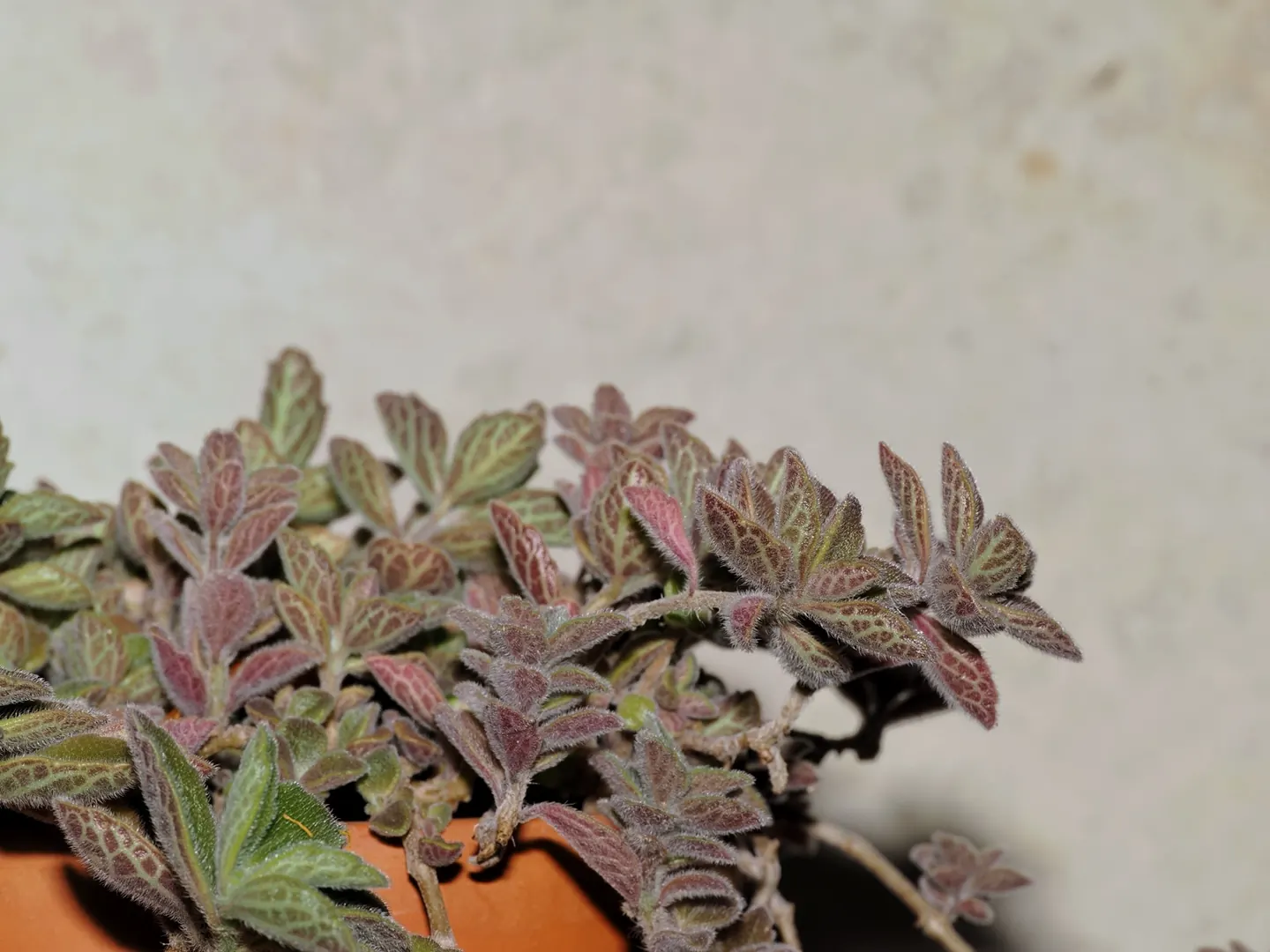
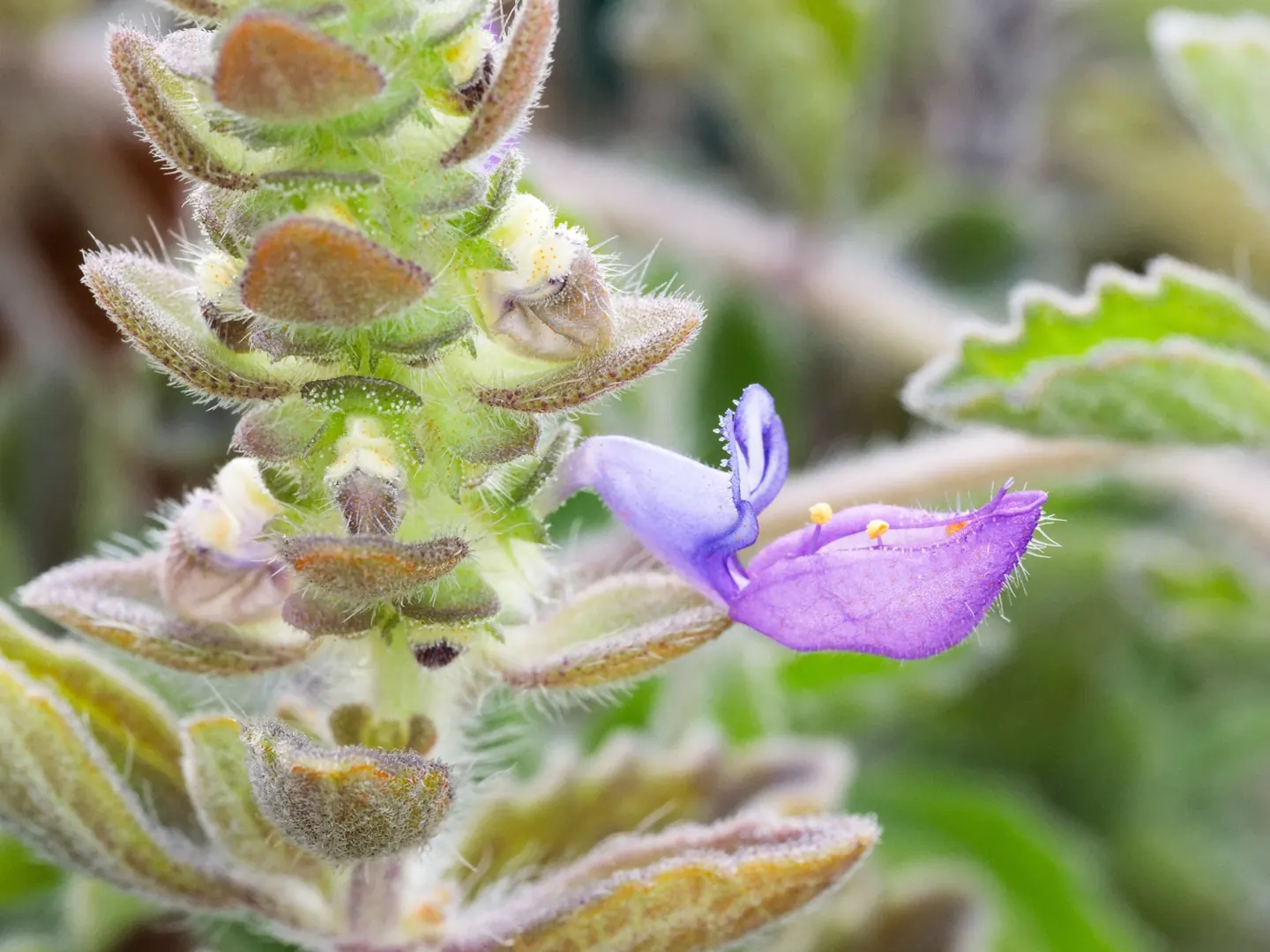
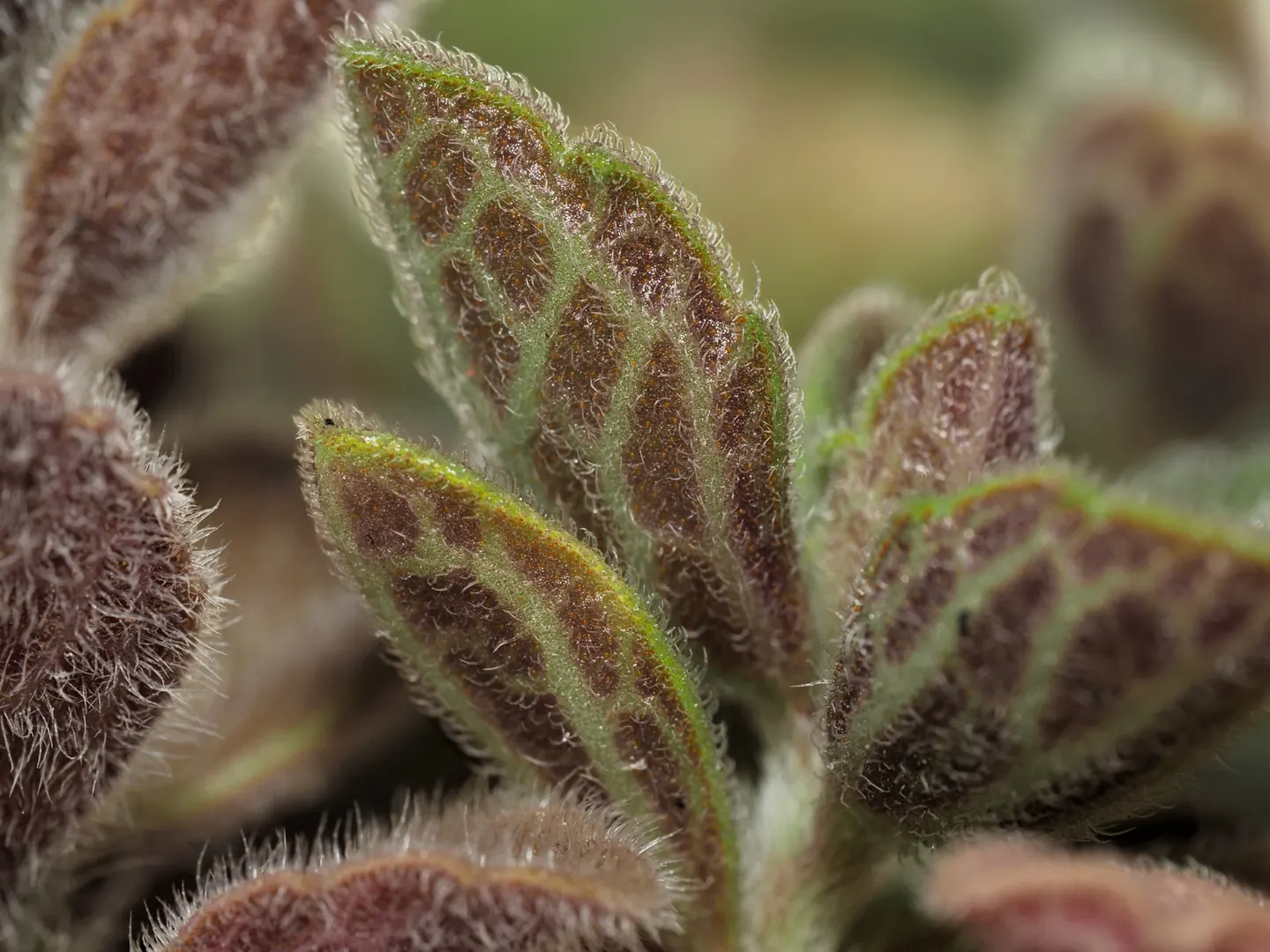
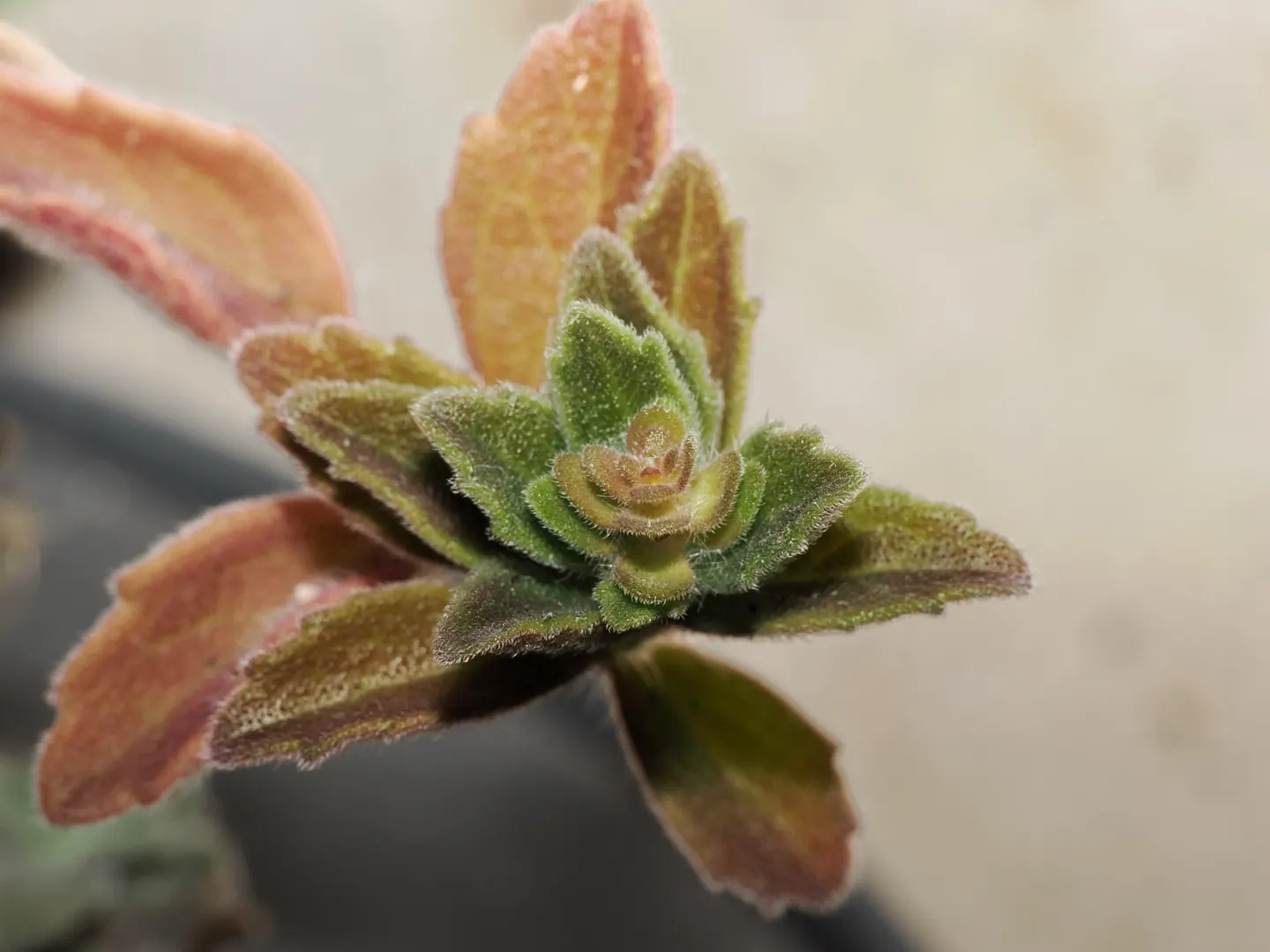
Ausdauerndes, halbsukkulentes und mehrstämmiges Kraut. Die niederliegenden, nur wenig verzweigten Triebe werden bis etwa 70 cm lang; die Blütenstände richten sich auf. Die weich sukkulenten, kurz gestielten Blätter sind eiförmig bis verkehrt-eiförmig, 15–25 mm lang und 12–20 mm breit. Auf der Blattunterseite sitzen orangerote Drüsenpunkte. Der endständige, dichte und ährenähnliche Blütenstand wird 50–80 mm lang; die Krone ist mauvefarben bis purpur und 15–18 mm lang. A perennial, semi-succulent, several-stemmed herb. The procumbent, sparingly branched stems reach about 70 cm, with the inflorescences ascending. The softly succulent, shortly petiolate leaves are ovate to obovate, 15–25 mm long and 12–20 mm wide, with orange-red gland dots beneath. The terminal, dense, spike-like inflorescence is 50–80 mm long; the corolla is mauve-purple and 15–18 mm long.
Codd beschreibt weder einen Caudex noch einen knolligen Wurzelstock. Eine im Alter möglicherweise verdickte Sprossbasis ist deshalb nicht mit einem ausgeprägten Caudex gleichzusetzen; die Art wird hier nicht als caudiciform geführt. Codd describes neither a caudex nor a tuberous rootstock. A stem base that may thicken with age should therefore not be equated with a pronounced caudex; the species is not treated here as caudiciform.
03 / LEBENSRAUM UND KULTURHABITAT AND CULTIVATION
Reading the habitat
- Mikrohabitat & Geologie Microhabitat & geology
- In der Flora of Southern Africa wird die Art vor allem mit trockener Dornbuschvegetation auf schwach salzhaltigen Ebenen in Verbindung gebracht. Das südliche Areal reicht dort von Mosambik und Simbabwe bis in das nördliche Namibia, nach Botswana, in den Nordosten Südafrikas, nach Eswatini und in das nördliche KwaZulu-Natal. In the Flora of Southern Africa, the species is chiefly associated with dry thorn scrub on brackish flats. Its southern range is recorded from Mozambique and Zimbabwe to northern Namibia, Botswana, north-eastern South Africa, Eswatini and northern KwaZulu-Natal.
- Klima / Biom Climate / biome
- saisonal trockene Tropen seasonally dry tropical
- Klima am dokumentierten FundortClimate at the documented locality
- Maktau, Kenia RM791: Ostkenianisches Trockenland: heißes semiarides Tropenklima mit langer Trockenzeit und meist zwei Regenzeiten; regional grob 250–650 mm/Jahr und 23–29 °C. Kiwayu ist maritimer und luftfeuchter.
- Maktau, Kenia RM791: Dry eastern Kenya: hot semi-arid tropical climate with a long dry season and usually two rainy seasons; regionally about 250–650 mm/year and 23–29 °C. Kiwayu is more maritime and humid.
Die Werte sind regionale Orientierungsbereiche, keine Messungen am Sammelpunkt. Grundlage sind WorldClim 2.1 (1970–2000) und die Köppen-Geiger-Karte (1980–2016); Mikrohabitate können deutlich abweichen.Values are regional orientation ranges, not measurements at the collection point. They are based on WorldClim 2.1 (1970–2000) and the Köppen-Geiger map (1980–2016); microsites may differ substantially.
- Cultivation inference
- Der niederliegende, weich sukkulente Wuchs und der saisonal trockene Lebensraum sprechen für einen warmen, hellen Standort, ein sehr durchlässiges Substrat und einen an Wachstums- und Trockenphasen angepassten Gießrhythmus. The procumbent, softly succulent habit and seasonally dry habitat point to warm, bright conditions, a very free-draining substrate and watering adapted to active growth and drier phases.
- Status of information
- LEBENSRAUM BELEGT · KULTUR ABGELEITET HABITAT DOCUMENTED · CULTIVATION INFERRED
04 / ETHNOBOTANIKETHNOBOTANY
Überlieferte NutzungTraditional use
In den für dieses Porträt verwendeten Quellen ist keine eindeutig artspezifische traditionelle Nutzung belegt. Angaben zu verwandten Arten werden nicht übertragen.The sources used for this profile do not document an unambiguous species-specific traditional use. Uses reported for related species are not transferred.
05 / SAMMLUNGCOLLECTION
Collection record
Zwei dokumentierte Zugänge aus Maktau, Kenia: RM 790 und RM 791.Two documented accessions from Maktau, Kenya: RM 790 and RM 791.
DOKUMENTIERTE ZUGÄNGEDOCUMENTED ACCESSIONSDokumentierte Zugänge:Documented accessions:
- Coleus lasianthus — Maktau, Kenia RM791
- Coleus lasianthus — Maktau, Kenia RM790
06 / QUELLENSOURCES
Literature used
- Codd, L. E. (1975): Plectranthus (Labiatae) and allied genera in Southern Africa. Bothalia 11(4): 371–442; Plectranthus tetensis: 390–391.
- Codd, L. E. (1985): Lamiaceae. In: Leistner, O. A. (Hrsg.), Flora of Southern Africa 28(4): 1–247; Behandlung von Plectranthus tetensis: 148–150, Fig. 27:2.
- Govaerts, R. et al.: World Checklist of Vascular Plants, Royal Botanic Gardens, Kew.
- Paton, A. J. et al. (2019): Nomenclatural changes in Coleus and Plectranthus (Lamiaceae). PhytoKeys 129: 1–158.
- Paton, A. J. et al. (2009): Flora of Tropical East Africa — Lamiaceae.
- Thulin, M. (Hrsg.) (2006): Flora of Somalia, Band 3.
- van Jaarsveld, E. J. (2006): The Southern African Plectranthus and the Art of Turning Shade to Glade.
- Eggli, U. (Hrsg.): Illustrated Handbook of Succulent Plants, Bände 1–2.
- Fick, S. E. & Hijmans, R. J. (2017): WorldClim 2: new 1-km spatial resolution climate surfaces for global land areas. International Journal of Climatology 37: 4302–4315.
- Beck, H. E. et al. (2018): Present and future Köppen-Geiger climate classification maps at 1-km resolution. Scientific Data 5: 180214.
07 / EIGENE AUFNAHMENCULTIVATED PLANTS
Pflanzen in KulturPlants in cultivation