Lamiaceae · ARCHIVBLATT
Coleus
cylindraceus
Akzeptierter Name nach Kew: Accepted name according to Kew: Coleus cylindraceus
Historische Behandlung: Plectranthus cylindraceus Historical treatment: Plectranthus cylindraceus
01 / VERBREITUNGDISTRIBUTION
Natürliche VerbreitungNatural distribution
Nach Kew WCVP: Trop. & S. Africa, Arabian Pen., S. India. According to Kew WCVP: Trop. & S. Africa, Arabian Pen., S. India.
02 / ERKENNUNGCHARACTERS
Wuchs und Merkmale Habit and characters
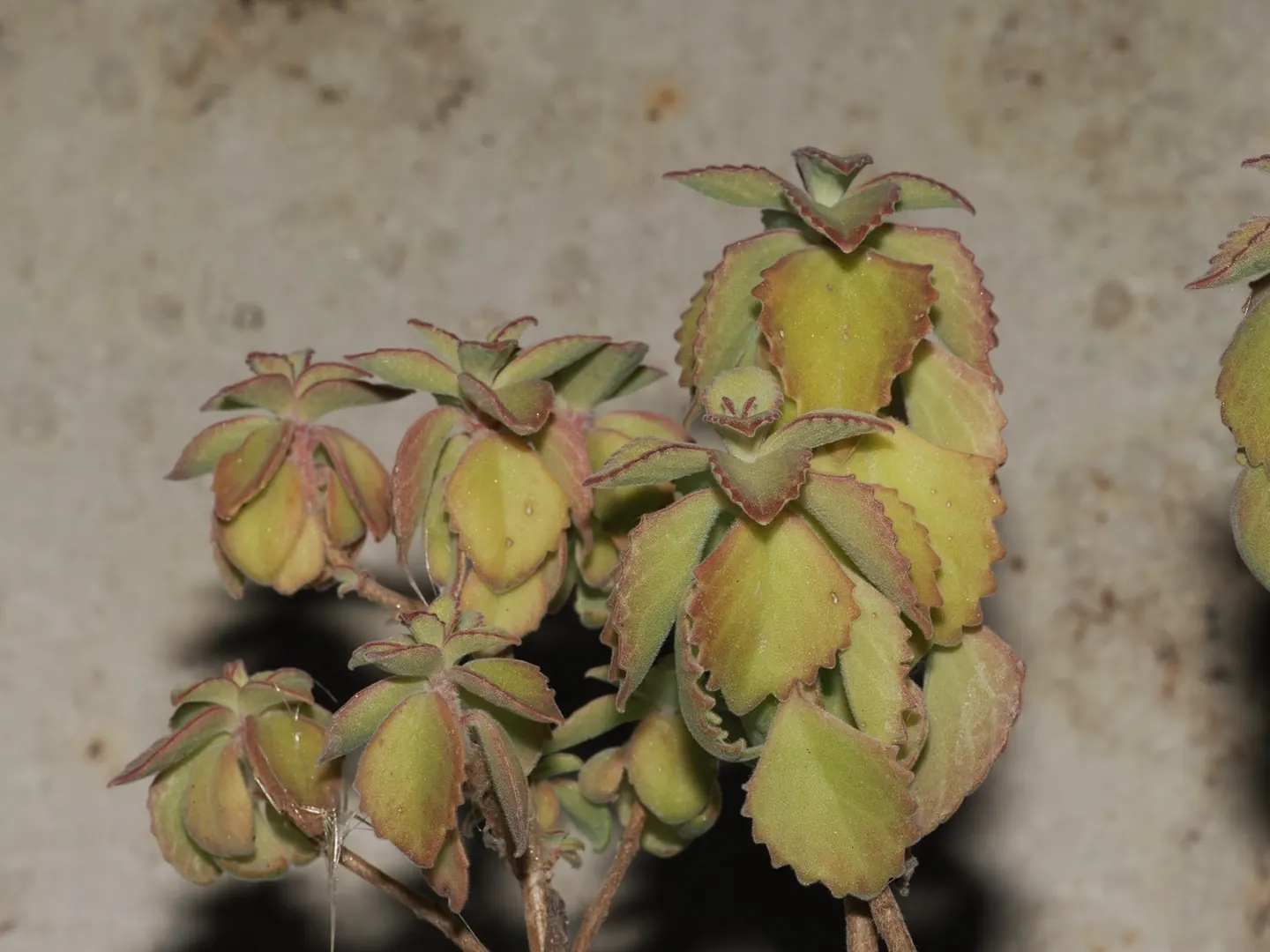
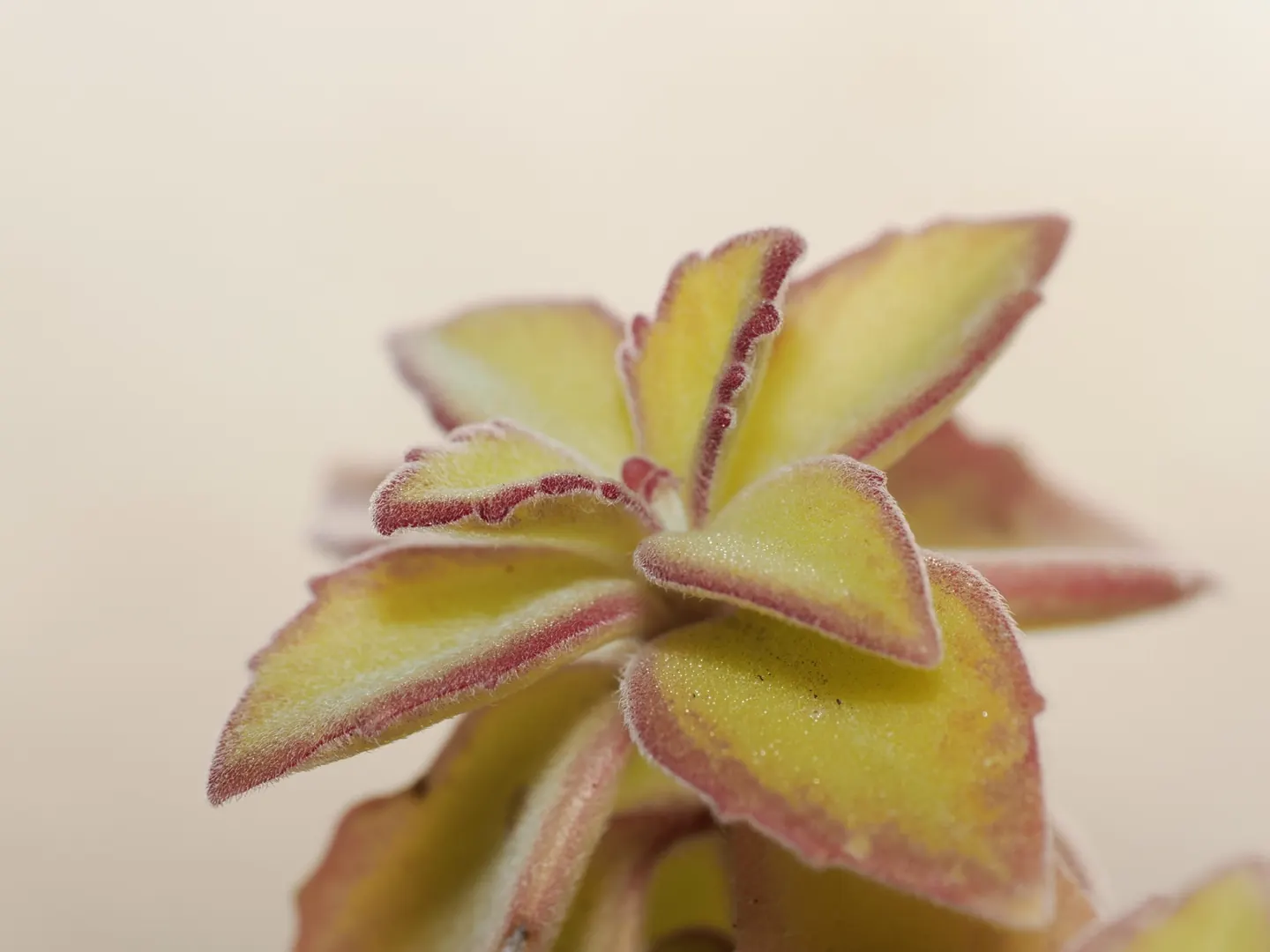
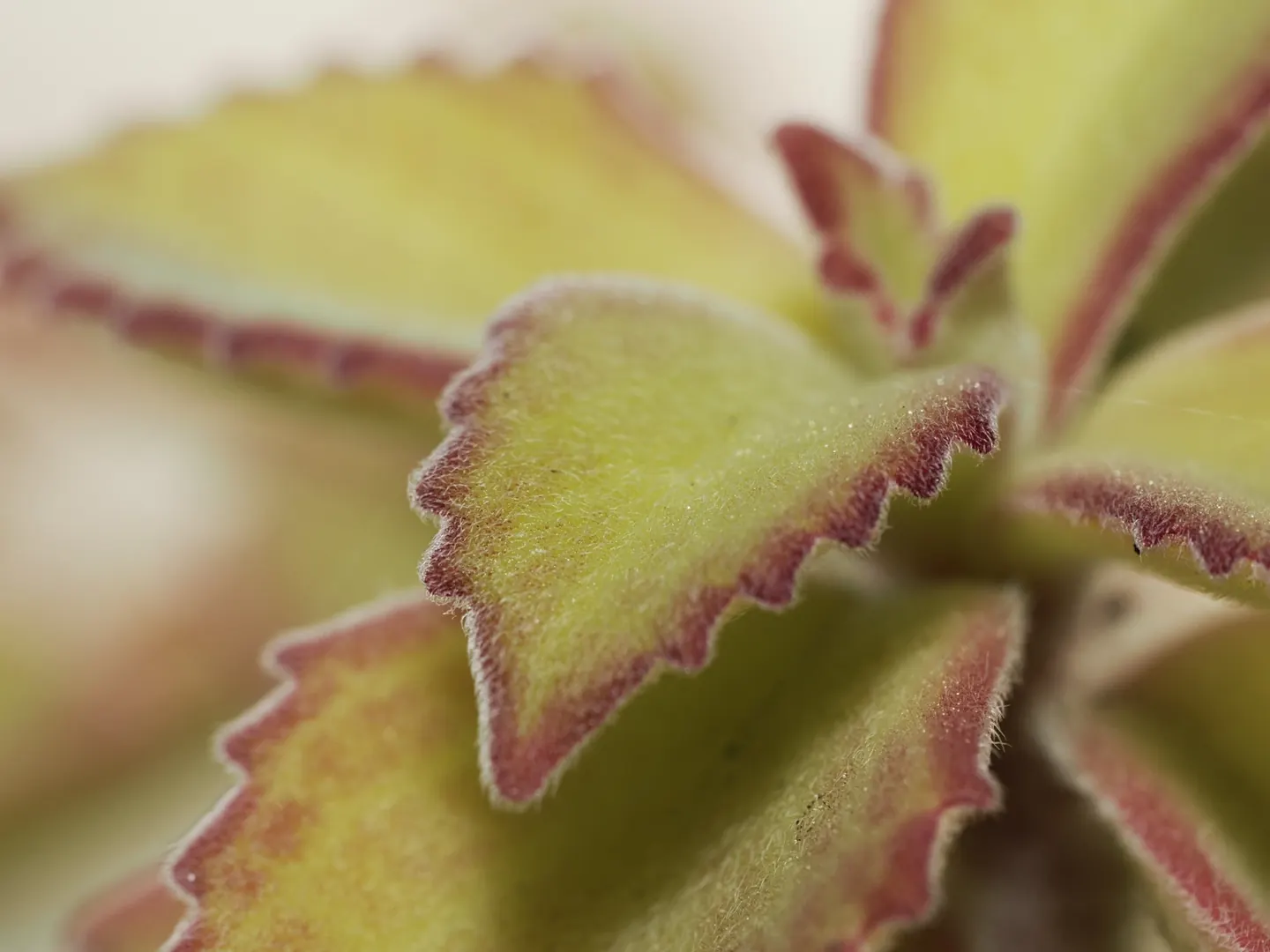
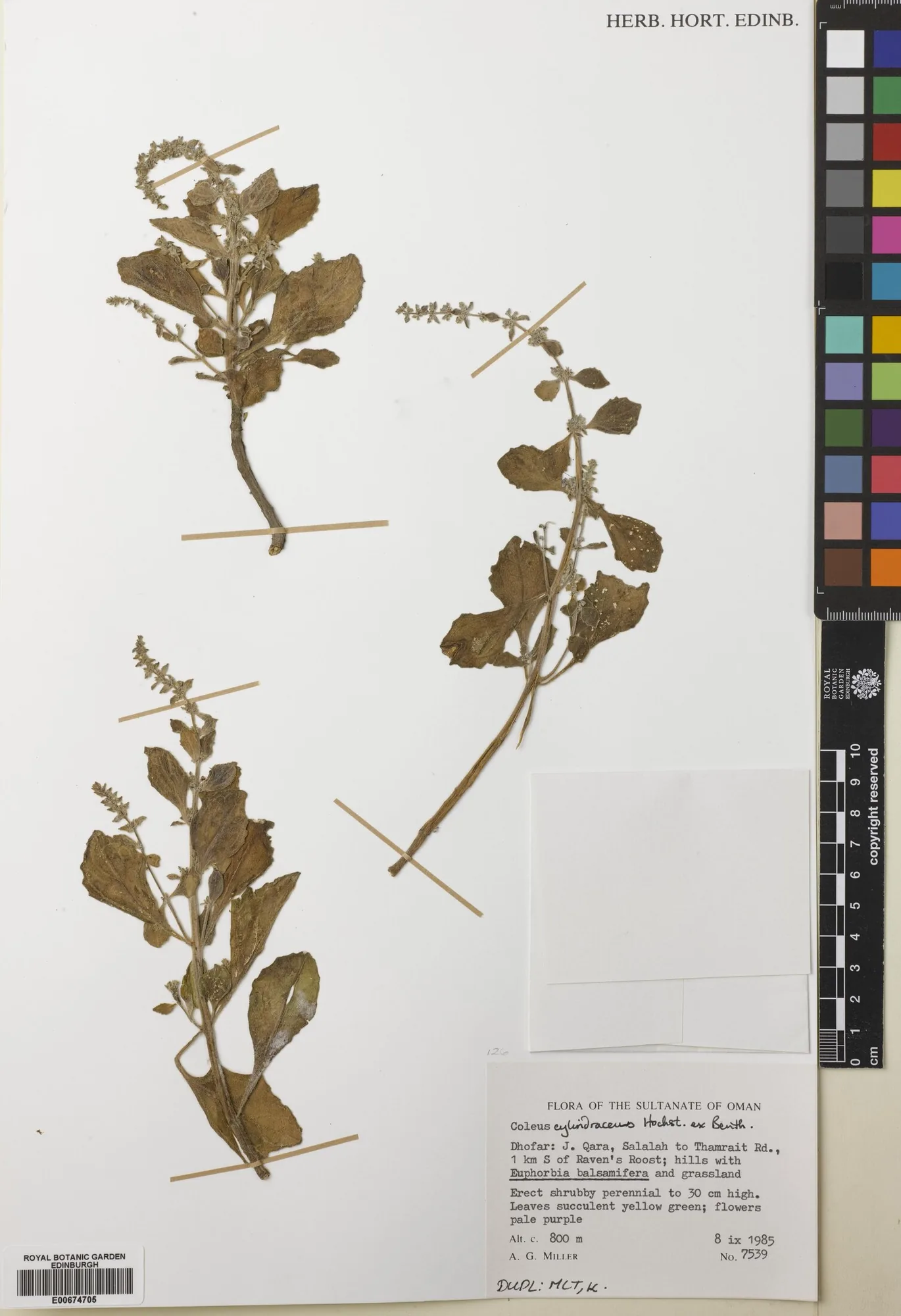
Ausdauernde sukkulente Pflanze mit einer dichten Rosette grundständiger Blätter, aus der jährlich mehrere bis viele aufrechte oder niederliegende, 0,6–1,5 m lange Stängel hervorgehen. Die fleischigen, breit verkehrt-eiförmigen bis länglich-verkehrt-eiförmigen Blätter messen 25–50 × 15–40 mm. Der dichte, häufig verzweigte Blütenstand wird 80–350 mm lang; die sehr kleinen Blüten sind weißlich bis blassgelb. A perennial succulent forming a dense cluster of basal leaves, from which several to many erect or decumbent stems 0.6–1.5 m long arise annually. The fleshy, broadly obovate to oblong-obovate leaves measure 25–50 × 15–40 mm. The dense, often branched inflorescence is 80–350 mm long; the very small flowers are whitish to pale yellow.
03 / LEBENSRAUM UND KULTURHABITAT AND CULTIVATION
Reading the habitat
- Mikrohabitat & Geologie Microhabitat & geology
- Weit verbreitet in Afrika; im südlichen Teil des Areals häufig gesellig in trockenem Waldland, auf Termitenhügeln unter Dornbäumen, auf schwach salzhaltigen Böden und in Spalten exponierter Felshänge. Widespread in Africa; in the southern part of its range it often grows communally in dry woodland, on termitaria beneath thorn trees, on brackish soils, and in crevices on exposed rocky slopes.
- Klima / Biom Climate / biome
- saisonal geprägter Standort seasonally structured habitat
- Klima am dokumentierten FundortClimate at the documented locality
- L&B871 Jabal al-Qara, Oman, about 2km South of checkpoint on Salalah-Thumrait Road: Dhofar-Randgebirge: heiß-arid, durch den Khareef im Sommer jedoch mit Nebel, Niesel und deutlich erhöhter Luftfeuchte; regional etwa 100–400 mm Jahresniederschlag zuzüglich Nebelniederschlag, Jahresmittel grob 20–27 °C.
- Jabal Hadaba, Yemen: Jemen: arid bis semiarid; Hochlagen sind gegenüber dem Tiefland deutlich gemäßigter, mit episodischen, überwiegend sommerlichen Regenfällen. Regional etwa 150–500 mm/Jahr und je nach Höhe 18–28 °C.
- L&B871 Jabal al-Qara, Oman, about 2km South of checkpoint on Salalah-Thumrait Road: Dhofar escarpment: hot-arid, but summer khareef brings fog, drizzle and much higher humidity; regionally about 100–400 mm annual precipitation plus fog deposition, with rough annual means of 20–27 °C.
- Jabal Hadaba, Yemen: Yemen: arid to semi-arid; highlands are markedly cooler than lowlands, with episodic mainly summer rainfall. Regionally about 150–500 mm/year and 18–28 °C depending on elevation.
Die Werte sind regionale Orientierungsbereiche, keine Messungen am Sammelpunkt. Grundlage sind WorldClim 2.1 (1970–2000) und die Köppen-Geiger-Karte (1980–2016); Mikrohabitate können deutlich abweichen.Values are regional orientation ranges, not measurements at the collection point. They are based on WorldClim 2.1 (1970–2000) and the Köppen-Geiger map (1980–2016); microsites may differ substantially.
- Cultivation inference
- Trockene Waldstandorte und Felsspalten sprechen für einen warmen, hellen Platz, ein stark mineralisches und sehr durchlässiges Substrat sowie einen saisonalen Gießrhythmus. Während des Austriebs gründlich, aber mit klaren Trockenphasen gießen. Dry woodland and rock-crevice habitats point to warm, bright conditions, a strongly mineral and very free-draining substrate, and seasonal watering. Water thoroughly during active growth, with clear drying intervals.
- Status of information
- LEBENSRAUM BELEGT · KULTUR ABGELEITET HABITAT DOCUMENTED · CULTIVATION INFERRED
Die Oman-Flora dokumentiert Pflanzen dieses Formenkreises in Dhofar an felsigen Aufschlüssen und kleinen Klippen der Gipfelgrasländer, vor allem in trockeneren Bereichen des Steilabfalls in 700–1200 m Höhe. Taxonomisch behandelt sie diese Pflanzen als Plectranthus montanus und führt P. cylindraceus als Synonym; dieses Porträt folgt dagegen der gegenwärtig verwendeten Kombination Coleus cylindraceus.The Oman flora records plants of this complex in Dhofar on rocky outcrops and small cliffs of summit grasslands, especially in drier parts of the escarpment at 700–1200 m. Taxonomically it treats them as Plectranthus montanus and lists P. cylindraceus as a synonym; this portrait instead follows the currently used combination Coleus cylindraceus.
04 / ETHNOBOTANIKETHNOBOTANY
Überlieferte NutzungTraditional use
Lokale Namen: kayo-kiyo (Kamba, Kenia), kachencho bzw. kachenjo (Pokot, Kenia), saweriyang (Iraqw, Tansania), barbarisha gara (Oromo, Ost-Äthiopien) und dumio (Maale, Südäthiopien). Gesicherte wörtliche Übersetzungen liegen nicht vor.Local names: kayo-kiyo (Kamba, Kenya), kachencho or kachenjo (Pokot, Kenya), saweriyang (Iraqw, Tanzania), barbarisha gara (Oromo, eastern Ethiopia), and dumio (Maale, southern Ethiopia). Reliable literal translations are not documented.
In den für dieses Porträt verwendeten Quellen ist keine eindeutig artspezifische traditionelle Nutzung belegt. Angaben zu verwandten Arten werden nicht übertragen.The sources used for this profile do not document an unambiguous species-specific traditional use. Uses reported for related species are not transferred.
05 / SAMMLUNGCOLLECTION
Collection record
Dokumentierter Zugang L&B 871, Jabal al-Qara, Oman, etwa 2 km südlich des Kontrollpunkts an der Straße Salalah–Thumrait; ein weiterer Zugang ohne Lokalitätsangabe.Documented accession L&B 871, Jabal al-Qara, Oman, about 2 km south of the checkpoint on the Salalah–Thumrait road; one further accession without locality data.
DOKUMENTIERTE ZUGÄNGEDOCUMENTED ACCESSIONSDokumentierte Zugänge:Documented accessions:
- Coleus cylindraceus — L&B871 Jabal al-Qara, Oman, about 2km South of checkpoint on Salalah-Thumrait Road
- Coleus cylindraceus — ohne weitere Lokalitäts- oder Feldnummernangabe
- Coleus cylindraceus — Jabal Hadaba, Yemen
06 / QUELLENSOURCES
Literature used
- Codd, L. E. (1975): Plectranthus (Labiatae) and allied genera in Southern Africa. Bothalia 11(4): 371–442; Plectranthus cylindraceus: 385–387.
- Codd, L. E. (1985): Lamiaceae. In: Leistner, O. A. (Hrsg.), Flora of Southern Africa 28(4): 1–247; Behandlung von Plectranthus cylindraceus: 146–147.
- Govaerts, R. et al.: World Checklist of Vascular Plants, Royal Botanic Gardens, Kew.
- Paton, A. J. et al. (2019): Nomenclatural changes in Coleus and Plectranthus (Lamiaceae). PhytoKeys 129: 1–158.
- Paton, A. J. et al. (2009): Flora of Tropical East Africa — Lamiaceae.
- van Jaarsveld, E. (2006): Southern African Plectranthus and the art of turning shade to glade.
- Fick, S. E. & Hijmans, R. J. (2017): WorldClim 2: new 1-km spatial resolution climate surfaces for global land areas. International Journal of Climatology 37: 4302–4315.
- Beck, H. E. et al. (2018): Present and future Köppen-Geiger climate classification maps at 1-km resolution. Scientific Data 5: 180214.
- Ghazanfar, S. A. (2015): Flora of the Sultanate of Oman, Vol. 3. Scripta Botanica Belgica 55; Plectranthus montanus: 125–126.
07 / EIGENE AUFNAHMENCULTIVATED PLANTS
Pflanzen in KulturPlants in cultivation